

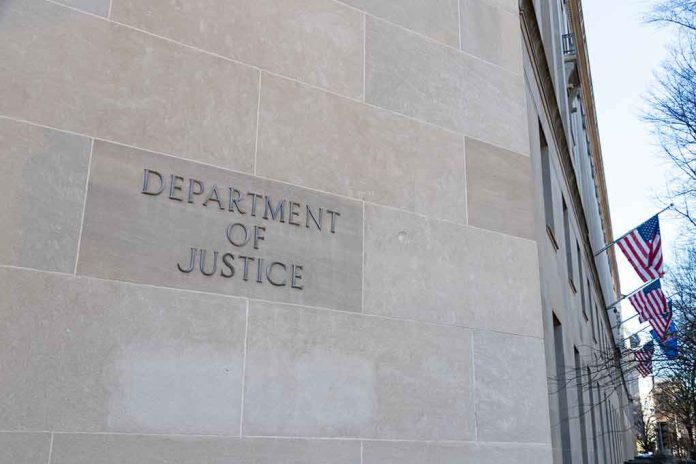
The Justice Department’s new $30 million settlement with PayPal over an “illegal DEI” lending program signals that both corporate America and Washington are willing to trade equal treatment under the law for political optics.
Story Snapshot
- Justice Department settles with PayPal over a race-conscious 2020 investment fund aimed at Black and minority-owned businesses.
- PayPal admits no wrongdoing, yet agrees to end the old program structure and retool support for small businesses.
- The deal reflects Trump-era Justice Department efforts to attack “illegal DEI” while avoiding courtroom tests of the law.
- The case raises deeper questions about whether Washington still protects equal opportunity instead of picking political favorites.
What The PayPal Settlement Actually Does
The United States Department of Justice announced a settlement with PayPal over its 2020 Economic Opportunity Fund, a $530 million commitment designed to expand support for Black and minority-owned businesses during the pandemic.[1][3] Federal officials said the program used preferences based on race, color, and national origin in allocating investment support, raising concerns under fair lending rules like the Equal Credit Opportunity Act.[1][3] Rather than face a lawsuit, PayPal agreed to a negotiated deal that restructures its approach.
Under the settlement, PayPal will launch a new Small Business Initiative that removes race, national origin, and other protected traits from eligibility criteria.[1][2][3] The company will waive processing fees on up to one billion dollars in transactions for qualifying American small businesses, including those that are veteran-owned or involved in farming, manufacturing, or technology, an estimated benefit of about thirty million dollars.[1][2][3][4] PayPal will also designate a director for the initiative, conduct needs assessments, train staff on lending law, and provide annual reports to the government.[1][2][3]
Why The Justice Department Calls It ‘Illegal DEI’
Justice Department leaders framed the deal in sweeping terms, saying it shows the Trump administration is fulfilling a promise to “root out illegal DEI from every corner of corporate America.”[1][3] Acting Attorney General Todd Blanche warned that corporations using race or national origin in deciding who gets financial support should expect aggressive enforcement.[1][3] Civil Rights Division chief Harmeet Dhillon said PayPal’s agreement affirms that race and national origin “should play no part” in determining which small businesses deserve investment or support.[1][3]
The department’s press materials described the Economic Opportunity Fund as discriminatory because it was created for Black and minority-owned businesses and because it did not purport to remedy specific, documented past discrimination.[1][3] That distinction matters because civil-rights law sometimes allows race-conscious measures when they are tightly linked to correcting proven, concrete past harms. Here, Justice officials did not present a public record showing such a remedial basis, and instead signaled that corporate diversity efforts cannot use protected traits as gatekeeping criteria for capital or credit access.[1][3]
PayPal’s No-Fault Deal And The Missing Legal Test
While the Justice Department touted the outcome as a victory against unlawful discrimination, it also acknowledged that it never made a formal finding that PayPal violated the Equal Credit Opportunity Act or any other federal law.[3][4] PayPal settled the matter without admitting liability or wrongdoing, a standard feature of many corporate deals.[2][4] That structure lets Justice claim it has “sent a message” to boardrooms, while letting PayPal tell investors and customers that the company avoided a lengthy fight without conceding that it broke the law.
Because there was no court ruling or administrative adjudication, the case leaves several big questions unanswered. Public documents do not include the fund’s full eligibility rules, outcome data, or a detailed legal analysis of whether its structure actually met or violated equal-credit standards.[1][2][4] There is no independent dataset showing who applied, who was approved, and whether decisions tracked race or neutral business factors.[1][2] For citizens who want transparent, principle-based enforcement rather than negotiated headlines, that gap fuels suspicion toward both the company and the government.
What This Signals For Corporate America And Ordinary Citizens
The PayPal agreement fits a pattern of increasingly aggressive Justice Department scrutiny of race-conscious corporate programs, especially those launched during the 2020 racial-justice wave.[1][2][3] Officials have used sharp rhetoric about “illegal DEI,” putting companies on notice that even well-intended efforts to help disadvantaged communities can trigger investigations if they rely on protected traits as explicit filters. Corporate lawyers now face pressure to strip race-based criteria and design assistance programs around race-neutral categories like income, geography, or industry.
🚨 The Trump DOJ just secured a $30 million settlement with PayPal over what it called an unlawful DEI investment program. PayPal will now launch a new small-business initiative without race or national-origin criteria. Huge work by Harmeet Dhillon and the Civil Rights Division. pic.twitter.com/6UfmZ4cYTg
— HIS GLORY (@HISGLORYME) May 13, 2026
For Americans across the political spectrum, the episode underscores a larger frustration: powerful players cut deals behind closed doors while everyday people are left guessing what the rules really are. Conservatives see a long-overdue correction to race-based preferences that made some business owners feel like second-class citizens. Liberals see another instance where efforts to address real inequities are shut down without a full public airing of the facts. Both sides see an elite negotiation that avoids clear accountability.
How It Ties Into The Bigger Crisis Of Trust
This kind of settlement deepens a sense that the system works differently for large institutions than for families, workers, and small entrepreneurs. When Washington quietly negotiates rather than letting courts test the law, citizens are left wondering whether principles like equal protection and equal opportunity are being consistently applied. The PayPal case suggests that civil-rights enforcement can be steered by political priorities—whether “DEI” branding or “anti-DEI” branding—rather than by transparent standards that everyone can see and rely on.[1][2][3]
Americans who are trying to build something through their own effort—regardless of race or politics—need simple, knowable rules: lenders cannot deny them capital because of their skin color, but also cannot shut them out because they are not part of a fashionable initiative. The bottom line from the PayPal settlement is not that one side won and the other lost. It is that the real fight over equal treatment is happening in back rooms between lawyers, while ordinary citizens watch their trust in both corporations and the federal government continue to erode.
Sources:
[1] Web – Justice Department Secures $30M Settlement with PayPal Over DEI …
[2] Web – PayPal settles with DOJ over DEI – Payments Dive
[3] Web – DOJ settles with PayPal over alleged DEI-based … – Fox Business
[4] Web – DOJ reaches $30 million deal with PayPal over minority-owned …