

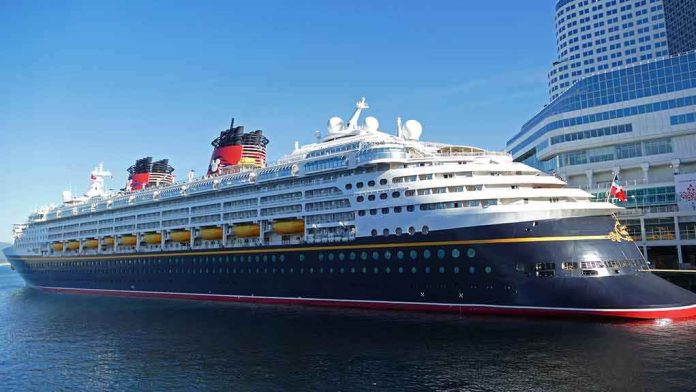
Americans returning from a hantavirus-stricken cruise ship face mandatory quarantine after one tests positive, raising fears that federal overreach could turn a rare threat into widespread restrictions on everyday freedoms.
Story Snapshot
- Centers for Disease Control and Prevention (CDC) responds to deadly Andes virus outbreak on M/V Hondius cruise ship, with three confirmed deaths and one U.S. passenger testing positive upon return.[3][1]
- Seventeen asymptomatic Americans quarantined at University of Nebraska Medical Center despite no U.S. secondary cases reported from the outbreak.[2][3]
- Andes virus, unique for human-to-human transmission, carries up to 50% fatality rate, prompting European Centre for Disease Prevention and Control (ECDC) recommendations for six-week monitoring.[1]
- Inconsistent state protocols highlight government disarray: Arizona rejects isolation while Nebraska enforces facility quarantine.[2]
- Broader U.S. hantavirus trend shows 890 cases since 1993, mostly from rodent exposure west of the Mississippi, fueling shared distrust in elite-driven health mandates.[1]
Cruise Ship Outbreak Details
The M/V Hondius cruise ship, departing Argentina on April 1, 2026, reported a cluster of severe respiratory illnesses by May 2. World Health Organization confirmed Andes virus, causing hantavirus pulmonary syndrome. Three passengers died: a Dutch man on April 11, his wife on April 26 in Johannesburg, and another on May 2 aboard the ship. CDC activated its Emergency Operations Center at level three, the lowest tier, to coordinate American repatriation.[3][2]
ECDC documented potential human-to-human spread, with at least one passenger possibly infected in Argentina or Chile transmitting to others onboard. This marks a rare departure from typical rodent-borne hantavirus transmission via aerosolized urine, droppings, or saliva. Experts note Andes virus requires intimate contact like sharing utensils or beds for spread.[1][2]
U.S. Passenger Response and Quarantine
Seventeen Americans arrived in the U.S. for quarantine at University of Nebraska Medical Center. One tested positive for Andes virus, though asymptomatic. CDC confirms no cases linked to the outbreak have appeared in the United States to date. Approximately 30 earlier returnees to states including Virginia, Georgia, Texas, Arizona, and California faced no quarantine or only self-monitoring, with no transmission detected.[3][2]
Arizona officials stated their passenger “is not isolating.” Texas mandated daily temperature checks. No new illnesses emerged on the ship in the six to seven days before final evacuations, despite monitoring by World Health Organization epidemiologists and Dutch specialists among 147 passengers and crew.[2]
Risk Assessment and Transmission Challenges
Andes virus incubation spans 1-8 weeks, justifying extended monitoring per ECDC guidance. Fatality rates reach 35-50%, often requiring heart-lung bypass for survivors. Microbiologists emphasize inefficient spread needing prolonged close contact, unlike airborne viruses. CDC assesses overall public risk as “extremely low,” yet precautionary measures persist amid post-COVID institutional biases favoring containment.[1][3][2]
A passenger who was onboard the MV Hondius cruise ship at the heart of a deadly hantavirus outbreak has shared an update from inside quarantine as delays plague the Australian government’s repatriation plans. https://t.co/cTCVXJh4LQ
— 7NEWS Melbourne (@7NewsMelbourne) May 12, 2026
Quarantine critics highlight psychological and economic costs without published cost-benefit analyses. Opportunities exist for serological testing data and contact tracing to refine protocols, exposing gaps in transparency from agencies like CDC and ECDC.[1][2]
Historical Context and Public Concerns
U.S. hantavirus surveillance since 1993 records 890 laboratory-confirmed cases, 859 as hantavirus pulmonary syndrome, with 35% fatal. Ninety-four percent occurred west of the Mississippi River, mainly from deer mice exposure. In 2025, seven U.S. cases yielded two deaths across Arizona, Colorado, Nevada, Washington, and Wisconsin.[1][6]
Colorado reports 121 cases from 1993-2023, second to New Mexico’s 129. Annual U.S. incidence holds at 20-40 cases, concentrated in western states. This cruise outbreak, while novel, underscores persistent rodent risks alongside debates over heavy-handed responses that erode trust in federal health authorities.[7][4]
Both conservatives wary of globalist overreach and liberals skeptical of elite control share frustrations with opaque decisions prioritizing institutional caution over individual rights. Inconsistent protocols and absent primary data like viral loads fuel perceptions of a deep state more focused on control than citizen welfare.[2][1]
Sources:
[1] Web – Questions and answers on the hantavirus outbreak in a cruise ship
[2] YouTube – Passengers aboard the hantavirus-hit cruise ship will …
[3] Web – Hantavirus: Current Situation – CDC
[4] YouTube – Some passengers could face 2-month quarantine after hantavirus …
[6] Web – Hantavirus explained: What to know after the cruise ship outbreak
[7] YouTube – What to know as passengers are evacuated from hantavirus-stricken …