

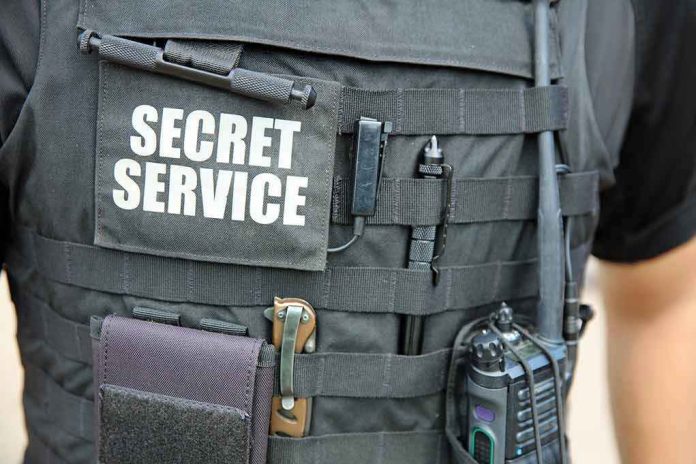
A Secret Service trainee tasked with protecting the nation’s leaders now faces felony charges for allegedly spying on his roommate with a hidden camera disguised as a phone charger at America’s premier federal law enforcement training facility.
Story Snapshot
- Joel Lara Canvasser, 41, arrested at Federal Law Enforcement Training Center in Georgia for alleged illegal surveillance
- Hidden spy camera concealed in phone charger allegedly captured full room coverage including bathroom area
- Trainee sent weeks of harassing stalker texts to roommate while conducting real-time surveillance
- Secret Service suspended clearance and access, citing “significant concerns about character and fitness to serve”
- Arrest raises troubling questions about agency vetting procedures following previous security failures
Elite Agency Trainee Faces Felony Surveillance Charges
Joel Lara Canvasser was arrested April 8, 2026, at the Federal Law Enforcement Training Center in Glynco, Georgia, and charged with felony unlawful eavesdropping. The 41-year-old Secret Service trainee allegedly concealed a spy camera inside a phone charger he offered to his suitemate after the roommate’s original charger mysteriously disappeared. Canvasser claimed cleaning staff may have taken it, then positioned the camera-equipped replacement below the television for complete room surveillance. He posted $8,458 bond and has not publicly commented on the allegations.
Psychological Harassment Campaign Escalates Suspicions
Throughout late March and early April 2026, the victim received disturbing text messages from multiple phone numbers suggesting he was being watched and stalked in real time. Initially dismissing these as spam, the roommate grew increasingly alarmed as the messages demonstrated intimate knowledge of his activities. He covered his phone camera with a Band-Aid out of concern. The psychological harassment campaign, combined with technological anomalies like his phone automatically connecting to Canvasser’s WiFi network, eventually led the victim to discover the concealed surveillance device by noticing a suspicious glint from the fake charger.
The victim also reported unauthorized nighttime entries into his room by Canvasser, creating an environment of intimidation and invasion that extended beyond digital surveillance. This combination of physical intrusion and remote monitoring represents a calculated pattern of behavior that raises serious questions about the accused trainee’s psychological fitness for federal service. The methodical nature of the alleged scheme—from making the original charger disappear to sending tailored harassing messages—suggests premeditation rather than impulsive misconduct, making the betrayal of trust even more egregious in an environment demanding the highest integrity.
Agency Responds as Vetting Failures Surface Again
Secret Service Deputy Director Matthew Quinn issued a statement calling the allegations “deeply troubling” and noting they “raise significant concerns about the individual’s character and fitness to serve.” The agency immediately suspended Canvasser’s system access and placed his security clearance under review. Canvasser had joined the Secret Service in fall 2025 after working as a presidential protection analyst, theoretically having undergone rigorous background checks required for those protecting the nation’s highest officials. The swift agency response demonstrates damage control, yet it cannot erase questions about how someone capable of such conduct passed initial screening.
Federal Training Integrity Undermined by Insider Threat
The Federal Law Enforcement Training Center serves as the primary training ground for over 90 federal agencies, where trainees are expected to embody the values they will uphold in protecting American citizens. This incident occurred in shared housing where future agents live in close quarters, an environment requiring mutual trust and professional conduct. The alleged violation strikes at the foundation of federal law enforcement credibility, particularly given the Secret Service’s already damaged reputation following the 2024 independent review that labeled security failures during a Trump rally assassination attempt as historic breakdowns requiring comprehensive reform.
For everyday Americans already frustrated with government institutions that seem more focused on self-preservation than public service, this case reinforces cynicism about the “elite” agencies supposedly protecting us. When those entrusted with the most sensitive security responsibilities cannot be trusted in basic interpersonal conduct, it fuels broader concerns about accountability and competence within the federal bureaucracy. The case remains pending in Glynn County with no trial date set, leaving the outcome uncertain while further eroding public confidence in institutions that desperately need to rebuild it through demonstrated integrity rather than damage control statements.
Sources:
Secret Service trainee accused of using hidden camera to spy on roommate – iHeart
Secret Service trainee accused of spying on roommate with hidden camera – Good Morning America