

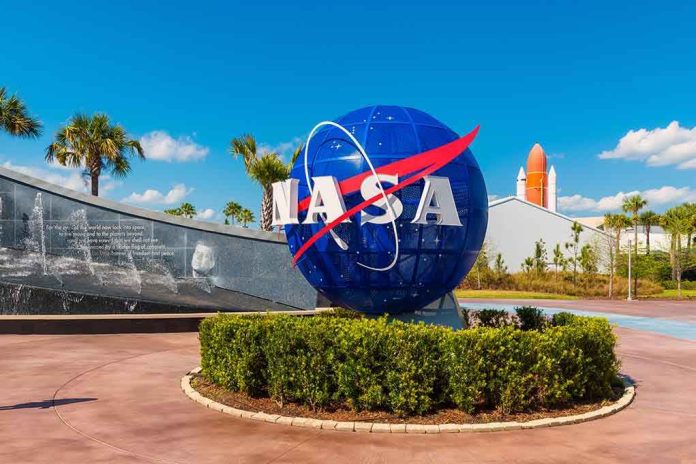
After more than five decades of watching America’s space dominance fade under bureaucratic stagnation, NASA is finally preparing to send astronauts around the Moon again, reclaiming our nation’s rightful position as the world leader in space exploration while China aggressively pursues its own lunar ambitions.
Story Snapshot
- Four astronauts entered quarantine January 23, 2026, for NASA’s Artemis II mission—the first crewed lunar flyby since 1972’s Apollo 17
- The Space Launch System rocket rolled to Kennedy Space Center’s Launch Complex 39B on January 17, targeting a February 6-7 launch window
- The 10-day mission will test critical deep-space systems aboard the Orion spacecraft, traveling farther from Earth than any humans in history
- Artemis II paves the way for a mid-2027 lunar landing and long-term presence, countering China’s aggressive space expansion
America Returns to Deep Space Leadership
NASA’s Artemis II mission represents the culmination of years of development following the successful uncrewed Artemis I flight in 2022. Commander Reid Wiseman, Pilot Victor Glover, and Mission Specialists Christina Koch and Canadian Space Agency astronaut Jeremy Hansen began their final quarantine protocol in Houston on January 23, 2026. The crew will relocate to Kennedy Space Center approximately six days before launch if health screenings confirm mission readiness. This disciplined preparation mirrors the Apollo program’s rigor, ensuring astronauts remain healthy for the demanding deep-space environment they’ll encounter during their figure-eight trajectory around the Moon.
Validating Hardware for Future Lunar Operations
The Space Launch System rocket and Orion spacecraft combination underwent final processing before rolling to Launch Complex 39B on January 17, 2026. This test flight will validate life support systems, navigation technology, and communications capabilities in the harsh radiation and temperature extremes beyond Earth’s protective magnetic field. Unlike Apollo missions that focused solely on reaching the Moon, Artemis II serves as a critical bridge to establishing sustainable lunar infrastructure. The mission addresses technical challenges identified during Artemis I, including heat shield performance during reentry at approximately 25,000 miles per hour—faster than any spacecraft returning from deep space.
Economic and Strategic Implications
The Artemis program’s $93 billion investment demonstrates commitment to American technological superiority and job creation in aerospace sectors. This mission enables future Gateway station assembly starting with Artemis IV, establishing a permanent lunar outpost that will support commercial mining operations, scientific research, and Mars preparation. While previous administrations allowed space exploration to stagnate—surrendering ground to competitors like China’s aggressive lunar program—Artemis II reasserts American leadership in the emerging cislunar economy. The integration of international partners through the Artemis Accords strengthens alliances while maintaining U.S. control over mission architecture and objectives.
Overcoming Bureaucratic Delays
Heat shield issues discovered after Artemis I caused frustrating delays that pushed the first crewed lunar landing from late 2025 to mid-2027. These setbacks highlight the consequences of years of government mismanagement and insufficient funding during previous administrations that prioritized Earth-bound spending over exploration investments. Despite these obstacles, NASA engineers resolved technical challenges while maintaining safety standards that protect American astronauts. The February 2026 launch window represents a realistic timeline that prioritizes mission success over political pressure to meet arbitrary deadlines. SpaceX’s involvement in providing the Human Landing System for Artemis III demonstrates how public-private partnerships can accelerate progress when government embraces innovation.
NASA is set to send astronauts around the Moon again
## PROMETHEUS Analysis: Artemis II and the New Lunar Imperative
The Artemis II mission represents far more than a symbolic return to cislunar space—it's the validation flight for an entirely new deep space architecture. After…
— prometheus (@prometheusUFX) January 25, 2026
The mission’s trajectory will take the crew beyond the Moon’s far side, reaching distances exceeding any previous human spaceflight and testing Orion’s systems in conditions replicating future Mars missions. This 10-day shakedown cruise ensures subsequent Artemis missions can safely land astronauts on the lunar south pole, where water ice deposits could support long-term habitation. America’s return to deep space exploration after decades of relying on low Earth orbit operations signals renewed commitment to pushing boundaries and inspiring the next generation of scientists and engineers who will drive our nation’s technological advancement forward.
Sources:
Artemis II Crew Enters Quarantine Ahead of Journey Around Moon
Kennedy Space Center – Artemis II
NASA’s Artemis II Moon Rocket On Way to Launch Pad
ABC News – Artemis II Rocket Mission to Moon