

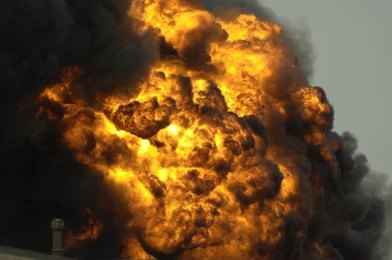
Two bombs exploded near Emmanuel Macron’s hotel in Damascus, but the French president stayed safe and kept moving through a city that still cannot fully protect a visiting head of state.
Quick Take
- French officials said Macron was safe and continued his visit after the blasts.
- Syrian officials said the explosions happened outside the French security perimeter.
- Reports said two devices went off near the Four Seasons Hotel, and 18 people were hurt.
- No group claimed responsibility, so the target and motive remain unconfirmed.
Macron Was Already at the Presidential Palace
According to the French presidency, Macron was not at the hotel when the explosions went off. He was already at the Syrian Presidential Palace meeting with Ahmed al-Sharaa, which means the blasts did not interrupt a direct face-to-face visit between the two leaders. Macron’s office also said he did not hear the explosions, underscoring how quickly the trip moved on despite the security scare.
The timing matters because it changes the story from a possible strike on a visiting president to a broader security incident in central Damascus. That distinction is important in a city where attacks, instability, and weak control have made official claims hard for many people to trust. Syrian state media said one explosive device was in a vehicle and another was in a garbage container near the hotel.
What Officials Say Happened
Syrian authorities said the blasts occurred outside Macron’s designated protection zone. They also said 18 people were injured, including four police officers. That injury count confirms a real blast impact, but it does not prove the French delegation was the target. The absence of a claimed attacker leaves the main question open: was this aimed at Macron, or was it another violent episode in a volatile capital?
That uncertainty is where the news has stayed for now. Media outlets have used words such as “possible” or “potential” assassination attempt, but those labels still rest on inference, not proof. The official accounts released so far do not identify a suspect, and the Syrian report relied in part on an unnamed security source. In a case like this, the gap between what is known and what is guessed can shape public reaction fast.
Why the Security Questions Matter
The blast also highlights a deeper problem that reaches beyond one visit. Damascus is still a city where violence can land near sensitive sites, and where governments on all sides have reason to shape the narrative. Syrian officials have an incentive to describe the event as contained. French officials have every reason to show calm. In that climate, people tend to distrust polished statements and look for hard proof instead.
That distrust is part of a larger pattern in political violence. When attackers do not claim responsibility, leaders, diplomats, and news outlets rush to fill the blank space with their own reading of events. The result is often confusion before facts. Here, the clearest facts are narrow but important: two blasts happened near Macron’s hotel area, Macron remained safe, 18 people were injured, and no one has publicly claimed the attack.
Sources:
townhall.com, cbsnews.com, cnn.com, facebook.com