

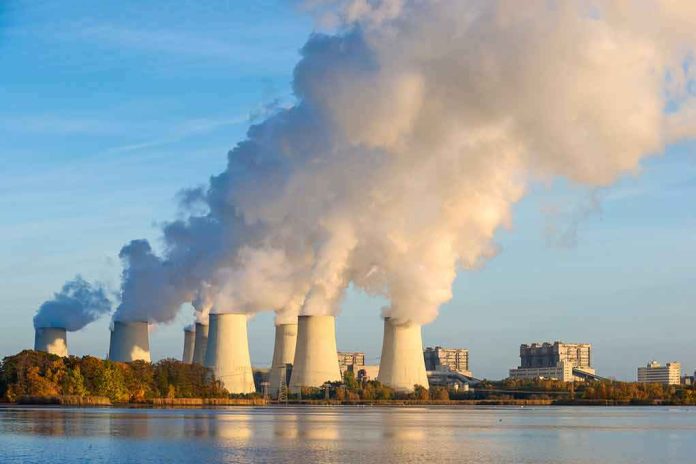
Romania shut down both reactors at its only nuclear power plant after the Danube River fell to record low levels, exposing how fragile critical energy systems become when the water runs dry.
Story Highlights
- Both Cernavodă reactors were taken offline or controlled down due to low Danube water, a first for Romania.
- The government declared a nationwide emergency as power supplies tightened and heat stressed the grid.
- Engineers blasted rock and sank barges to redirect river flow and protect cooling water intake.
- The plant normally supplies about one-fifth of Romania’s electricity, so outages hit homes and industry.
What Happened: Drought Cut the Plant’s Cooling Water
Romania’s state operator began a controlled shutdown of Cernavodă’s second reactor after record low Danube River levels narrowed safety margins for cooling water. Days earlier, the first reactor went offline for the same reason, marking the first time both units were disconnected at once because of river conditions. Officials said the steps followed safety procedures for very low flows, where operators must preserve the “heat sink” that removes heat from the reactor.
These were not grid-driven outages. They were engineering limits triggered by nature. The plant draws cooling water from the Danube. When levels and flow drop, pumps face head loss, intake screens clog with silt, and discharge temperatures must stay within permits. At a certain point, the safest move is to reduce power or shut down. That is what Romania did, following protocols designed to prevent equipment damage and protect the river environment.
Emergency Moves on the River to Buy Time
To defend the last running unit, authorities tried unusual river works. Crews sank four barges filled with rock and used controlled blasts to steer more water toward the intake channel. These measures raised local water levels just enough to extend safe operation for a limited number of days during the worst of the heat wave. Officials warned that the broader Danube trend remained downward, so the relief was temporary and closely monitored by water managers.
Such interventions show how far governments will go to hold the line when a single plant carries a big share of national power. Cernavodă often supplies about twenty percent of Romania’s electricity. When it drops, gas plants, coal units, and imports must fill the gap, often at higher cost. Households feel it in bills and in the risk of brownouts during heat. Factories face tighter load controls. Hospitals and data centers check backup generators and diesel stocks.
Government Response and Why It Matters to Voters
Romania declared a nationwide emergency for August after the first shutdown, citing lower electricity production and the need to coordinate fuel, imports, and demand response. The move aimed to protect hospitals, water systems, and food supply chains during a severe heat wave. It also freed agencies to speed permits for river work and adjust market rules to steady prices and prevent panic buying of power from neighbors.
There are wind turbines in that photograph, on the ridge behind the reactor buildings.
Cernavodă normally supplies about a fifth of Romania's electricity. Reactor 1 went offline last month. Reactor 2 began a controlled shutdown on Thursday, because the Danube — its lowest in…
— The ReFrame (@The_ReFrame_) August 14, 2026
For American readers, the lesson crosses politics. Water is the weak link for many types of power plants, not just nuclear. Coal and gas units also need cooling. Dams need flow. When rivers shrink, systems wobble. That risk angers people across the spectrum: high bills, supply shocks, and a sense that leaders plan for headlines, not hard limits. Romania’s scramble on the Danube is a warning to build grids that can ride out heat, drought, and floods without last-minute heroics.
What Comes Next: Reliability Under Hydrological Stress
Operators will restart reactors only when flows and levels meet safety margins. Engineers will review intake design, dredging plans, and backup cooling options that cut reliance on the river. Grid planners will reassess resource mixes for extreme weather, including more flexible plants, storage, and stronger cross-border links. None of this is fast or cheap, but it is cheaper than emergency shutdowns that ripple through homes, farms, and factories during peak summer demand.
Sources:
dw.com, abcnews.com, theguardian.com, romania-insider.com, apnews.com, x.com