

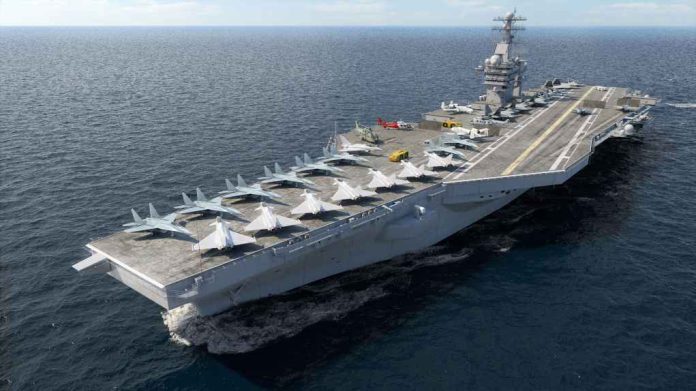
A Navy MH-60S Seahawk made an emergency water landing in the Arabian Sea, and three crew members were recovered while one remained missing.
Story Snapshot
- The U.S. Naval Forces Central Command said the helicopter made an emergency water landing at about 3:30 a.m. Eastern Time on July 1.
- The Navy said there was no indication the emergency was caused by hostile action.
- Three of the four crew members were recovered and were reported in stable condition aboard the USS George H.W. Bush.
- The cause of the incident remained under investigation as search operations continued for the missing crew member.
What the Navy Has Confirmed
The clearest fact is the Navy’s own wording. U.S. Naval Forces Central Command said the MH-60S Sea Hawk “conducted an emergency water landing” in the Arabian Sea and that there was no indication of hostile action. Reuters and Navy Times both repeated that official account, including the detail that the aircraft was assigned to the USS George H.W. Bush.
The Navy also said three crew members were recovered and were stable aboard the carrier, while one aircrewman remained missing. That matters because the recovery of most of the crew points toward an emergency response, not a confirmed attack. The Navy has not released a technical report, so the exact cause is still unknown, even though the public statement ruled out hostile action for now.
Why the Incident Drew Fast Attention
This story landed in a tense region, and that shaped how people read it. News reports tied the landing to heightened U.S.-Iran tensions, which made some headlines lean toward crash language or conflict framing. That kind of wording can spread fear before the facts are clear. It also feeds a broader public problem: many Americans on both sides doubt military transparency when an incident happens far from home.
Those doubts are not proof of anything, but they do explain why the first statement from the Navy matters so much. The official account is narrow and careful. It says there was no indication of hostile action, not that the investigation is finished. That distinction leaves room for mechanical failure, human error, weather, or another non-hostile cause, but none of those has been confirmed yet.
What Still Remains Unanswered
The biggest unanswered question is the missing crew member. The Navy said search efforts were ongoing, but it had not publicly explained what forced the landing or what conditions the crew faced before impact. Without a safety board report, flight data, or maintenance records, outside observers cannot verify the cause. That gap leaves the public stuck between an official statement and a lot of speculation.
The online reaction also shows how fast a military incident can get twisted. Some social media posts used the word “crash” instead of “emergency water landing,” which makes the event sound more certain and more severe than the Navy’s wording supports. In a country already worn down by distrust, that gap between official language and public chatter can widen suspicion even when the underlying facts have not changed.
Sources:
redstate.com, twz.com, navytimes.com, nypost.com, facebook.com