

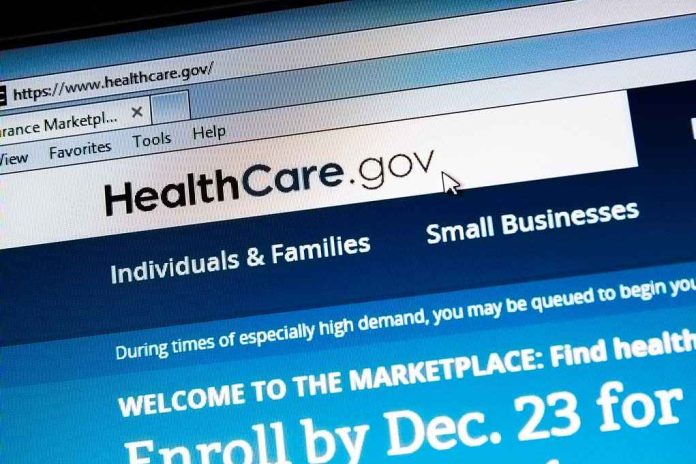
The Trump administration is moving to cut Obamacare subsidies tied to about 760,000 enrollments after officials flagged widespread ineligibility and suspected fraud.
Story Highlights
- Officials say 315,000 health plans covering about 760,000 people were canceled due to eligibility problems.
- The White House task force led by Vice President JD Vance targets unauthorized or fraudulent enrollments on the exchanges.
- The step is expected to save about $2.2 billion in taxpayer funds, according to reports.
- The action follows years of watchdog warnings about weak verification in Affordable Care Act exchanges.
Administration Targets Suspected Fraud and Ineligible Subsidies
Federal officials said the Centers for Medicare and Medicaid Services canceled 315,000 Affordable Care Act health plans that covered roughly 760,000 people in June. Officials cited unverified citizenship or immigration documents and suspected improper enrollments as the cause. Reporting says the White House fraud task force, led by Vice President JD Vance, plans to halt subsidies tied to accounts deemed unauthorized or fraudulent. The action focuses on exchange enrollments that fail to meet Affordable Care Act eligibility rules.
Vice President Vance’s team frames the move as an enforcement push to protect taxpayers and restore trust in the system. Administration briefings and coverage describe categories that triggered removal, including people enrolled without their knowledge, those who already had employer coverage, and households that appeared over the income limits for subsidies. The target is improper subsidy payments, not private coverage outside the exchanges. Officials say the goal is a cleaner, verified enrollment file going forward.
Projected Savings and Government Rationale
Reports tied to the rollout estimate the cancellations could save about $2.2 billion by ending subsidies for accounts that do not qualify under the law. That figure reflects halted monthly payments that would have otherwise flowed to insurers on behalf of ineligible enrollees. The task force portrays the savings as part of a larger campaign to cut waste, fraud, and abuse across entitlement programs. President Trump has also highlighted a refund plan to return overcharges to working families.
The enforcement wave follows a simple idea: subsidies must go only to eligible people. The Affordable Care Act requires proper status, income within set ranges, and no access to affordable employer coverage to qualify for premium help. The administration argues that loose verification in recent years let too many people slip through. Officials say the new checks aim to match records and documents, confirm income, and ensure that each dollar is lawful and earned by the rules Congress wrote.
What Led to the Crackdown
Years of warnings from auditors and watchdogs set the stage for this step. The Government Accountability Office and other oversight bodies have flagged risks in exchange verification, data matching, and broker practices. Analysts say the system’s mix of self-attestation and delayed documentation created openings for improper enrollment. The current action reflects that long trail of concerns and the view that stronger upfront checks are needed to protect taxpayers and honest families who follow the rules.
The Centers for Medicare and Medicaid Services reported that many affected accounts had unresolved citizenship or immigration status issues or other red flags. According to multiple outlets, the White House task force is coordinating with the agency to review enrollments and suspend subsidy payments where rules are not met. Officials have signaled that people who can prove eligibility may work with the agency to resolve issues and restore coverage support if they qualify under the law.
How Eligibility Works and What Consumers Should Know
Affordable Care Act subsidies hinge on clear guardrails. People generally qualify if household income falls between 100 percent and 400 percent of the federal poverty level, they enroll through the exchange, and they lack access to affordable employer coverage. If income is too high, or if a person can get a suitable plan at work, the law blocks subsidies. That is the logic behind these removals: stop payments that do not meet those conditions and prevent new improper enrollments.
BREAKING | Vance Announces Major Obamacare Fraud Crackdown Targeting Hundreds of Thousands
Vice President J.D. Vance has announced a major crackdown on suspected fraud and improper enrollment in Obamacare, with the administration moving to cancel or stop subsidies for roughly… pic.twitter.com/UIXdqsc1rK
— CSB News USA (@csbnewsus) September 22, 2026
Consumers who believe they were flagged in error should respond fast to any notice. Officials have said documentation can fix some mismatches, like a name or data error. The administration’s message is direct: the program must serve eligible Americans, not ghost accounts or people gaming the rules. Supporters say this protects working families’ tax dollars and keeps costs fair for seniors, small business owners, and parents already stretched by high premiums and inflation pressures.
Sources:
legit.ng, washingtonexaminer.com, katu.com, waysandmeans.house.gov, governing.com