

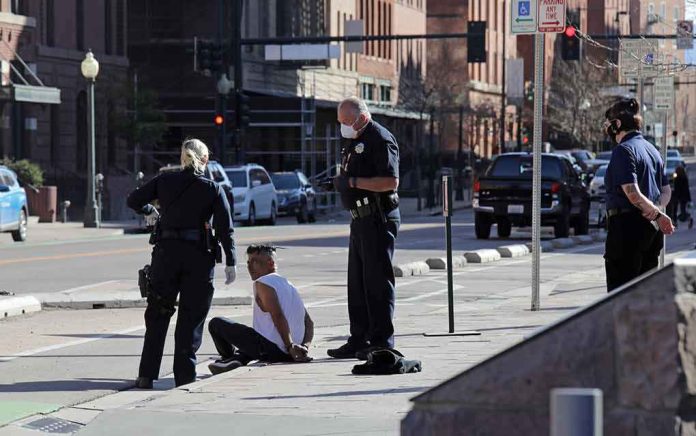
A driver put his car onto the sidewalk at the edge of the White House complex at midday Saturday, and when Secret Service officers pulled him out, he had one demand: he wanted to talk to President Trump.
As of Saturday, September 19, the Secret Service says the man is in custody and was taken to a hospital for a mental health evaluation. A sweep of the car found nothing dangerous. The president was at Camp David at the time.
Story Highlights
- Secret Service officers detained the man after his car went onto the sidewalk at 16th and H Streets Northwest, by Lafayette Square.
- The incident happened shortly after 12:15 p.m. Saturday.
- Nearby roads were closed out of caution; a vehicle sweep came back negative.
- The man reportedly demanded to speak with President Trump before being taken to a hospital.
What Happened On The North Side Of The White House
United States Secret Service officers detained a man after his car drove onto the sidewalk at 16th Street and H Street Northwest, beside Lafayette Square just north of the White House. The event unfolded shortly after 12:15 p.m. on Saturday and drew a fast, visible response from federal and local authorities. Officers set a perimeter within minutes. The corner sits on the outer ring of White House security, where even small breaches get a firm response.
Officials closed nearby roads while officers and technicians checked the vehicle. A spokesperson said the sweep returned negative results, and reporters at the scene confirmed nothing suspicious was found. The focus then shifted to the driver. Officers placed him in custody and moved him to an area hospital for a mental health evaluation, according to the agency’s statements carried by multiple outlets. President Trump was at Camp David when it happened.
The Demand, And The Response
Witness accounts and media reports say the man insisted on speaking with President Trump as officers detained him across from Lafayette Square. The demand did not change protocol. The Secret Service coordinates with the Metropolitan Police Department, the U.S. Park Police and military personnel to secure the perimeter and clear the area whenever a vehicle crosses into a protected zone, with or without a weapon present.
Reports describe a large security footprint on the block: agents, local officers and uniformed personnel directing pedestrians away from the scene. That matches long-standing White House protection policy, which relies on layered security, rapid interagency communication and broad stand-off distances to neutralize threats early. Officials framed Saturday’s closures and checks as precautionary.
Why Even A Curb Hop Triggers A Lockdown
White House perimeter incidents draw outsized responses because the site is both a symbol and a target. Federal reviews after past breaches called for faster reactions, stronger fencing and decisive outer-perimeter control to buy time for protective teams. The Secret Service’s Uniformed Division leads that mission at the complex. When a car mounts a sidewalk near secure fencing, the rules call for quick closure, containment and a full check, even if the driver has no weapon and no clear plan.
Saturday’s event also fits a familiar pattern: early alerts flag a potential breach, and later updates show a lower-end risk once the checks finish. Officials did not release the man’s name, charges or motive, so the legal outcome is not yet known. What is clear is that the protective layers worked as designed: stop the car, secure the scene, clear the vehicle, and move the subject to care.
Sources:
nypost.com, news.meaww.com, themirror.com