

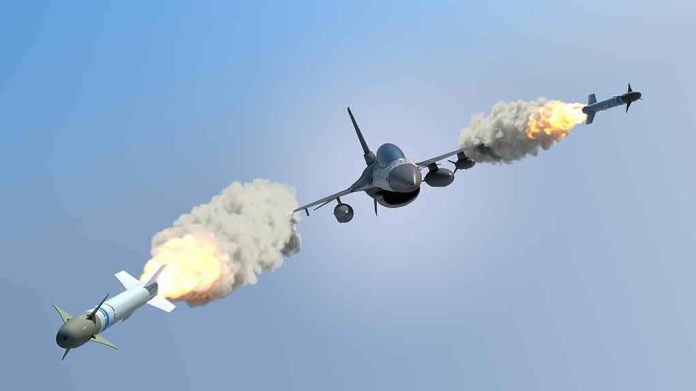
After Iran fired multiple ballistic missiles at U.S. forces and every one was shot down, American jets hit back inside Iran to crush the launch threat and protect our troops.
Story Snapshot
- CENTCOM says Iran launched multiple missiles at U.S. forces; all were intercepted.
- U.S. strikes targeted missile, drone, and coastal defense sites inside Iran.
- Military leaders framed the strikes as self-defense to shield American personnel.
- Public details on exact Iranian targets and damage remain limited in open sources.
What Triggered The Latest U.S. Strikes
United States Central Command said Iran launched multiple ballistic missiles in an attempted surprise attack on American forces based in the Middle East. Air and missile defenses intercepted the volleys with no reported U.S. casualties, according to press accounts summarizing the command’s statement. Officials did not publicly specify the exact bases Iran aimed to hit. That lack of detail remains one of the open items in the public record after the intercepts.
President Trump, as commander in chief, faces a regime that keeps testing U.S. resolve with missiles, drones, and naval harassment. Central Command has described these actions as unprovoked aggressions at sea and near key shipping lanes. American destroyers and regional bases remain at risk when Tehran chooses escalation. The first duty of government is to protect American lives. That means stopping attacks before they land and removing threats that put our people in the crosshairs.
Targets Hit Inside Iran And The Military Rationale
U.S. forces struck inside Iran to blunt follow-on attacks and reduce launch capacity. Reports based on Central Command statements say targets included missile and drone sites, control nodes, and coastal-defense systems tied to threats in and around the Strait of Hormuz. Earlier strike waves hit over 90 targets along Iran’s coastline, with video showing damage to a runway and launcher positions. Commanders said the goal was to protect American personnel and keep sea lanes open.
Reuters reported that U.S. aircraft also targeted Iranian boats that were attempting to lay mines, along with missile launch facilities in southern Iran. A named Central Command spokesperson called the actions defensive and aimed at safeguarding U.S. forces from dangers posed by Iranian units. That emphasis matches the legal and tactical basis for immediate self-defense, which allows rapid action to remove an active threat to U.S. troops and ships.
Protecting Troops And Global Energy Flows
The Strait of Hormuz carries a large share of the world’s oil. When Iran threatens that chokepoint, prices rise and families here feel it at the pump. Central Command said recent strikes sought to degrade capabilities Iran used to attack commercial shipping, including cruise missile storage and launch sites along the coast. Reducing those launchers lowers the chance that tankers or allied patrol craft will be hit, and it helps keep global energy moving.
American air defenses also stopped earlier Iranian ballistic missiles aimed at areas that host U.S. personnel, with no injuries reported at the time. That record shows layered defenses work, but it also shows the danger is real and ongoing. You cannot intercept forever if the enemy keeps building launch sites. Taking out radars, control stations, and attack drones inside Iran reduces the volume and accuracy of the next salvo before it starts.
Transparency Limits And What Comes Next
Public reporting from the battlefield is never perfect. Many details in this case come from official U.S. military statements carried by major outlets. Open sources do not yet show independent battle-damage reviews or full target coordinates. Central Command has not publicly identified the exact intended targets of Iran’s most recent launches. Those limits are common in active conflicts, but they also challenge citizens who want clear facts and full accountability.
Congress and the public should expect continued updates from the Pentagon, including strike videos, legal authority summaries, and damage assessments when release will not risk operations. For now, the mission is clear: defend American troops, keep vital sea lanes open, and deter a hostile regime that fires on our people. Strength, steady rules, and clear red lines are how we avoid a wider war while standing up for our men and women in uniform.
Sources:
facebook.com, reuters.com, cnn.com, npr.org