

A 16-year-old who killed four people at a Georgia high school has now admitted every charge, forcing the country to face yet another tragedy that the system failed to stop.
Story Snapshot
- Teen shooter Colt Gray pleaded guilty to all 55 charges in the 2024 Apalachee High School attack, with no plea deal.
- The shooting killed two students and two teachers and wounded nine others, making it the deadliest school shooting in Georgia history.
- Gray’s “non‑negotiated” plea leaves his sentence — life with or without parole — entirely up to the judge.
- Families used the hearing to slam failures by adults and institutions that they say allowed the attack to happen.
Teen Shooter Admits Guilt to All 55 Counts
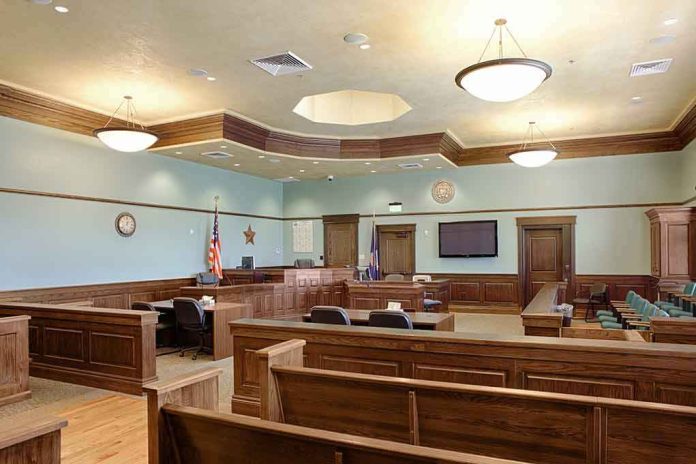
Barrow County Superior Court in Winder, Georgia, heard 16-year-old Colt Gray clearly say “guilty” to each of the 55 charges tied to the 2024 Apalachee High School shooting. Gray was 14 at the time of the attack but is being treated as an adult in court. He had first pleaded not guilty, but switched to a non-negotiated guilty plea, meaning there is no deal with prosecutors and no agreed sentence. The plea confirms what investigators, survivors, and families have said from day one: he was the shooter.
Judge Nicholas Primm walked Gray through his rights before accepting the plea, making sure the teen understood he was giving up a jury trial and the chance to force the state to prove its case. In the hearing video, the judge stresses that the choice must be voluntary and that no one can force him to plead guilty, and Gray answers, “Yes, your honor,” each time. Gray also tells the judge his mind is clear and that he knows the sentence will be the judge’s call alone. That record matters because it undercuts later claims that the system rushed him or confused him.
What Happened at Apalachee High School
On September 4, 2024, Gray opened fire inside Apalachee High School in Winder, about 45 miles northeast of Atlanta. The attack killed two students and two teachers and injured nine more people, turning an ordinary school morning into a war zone. Reporters describe it as the deadliest school shooting in Georgia’s history, another entry in a growing list of American schools hit by gun violence. Gray’s charges include malice murder, felony murder, aggravated assault, and child cruelty — a picture of extreme, planned harm against children and adults who thought they were safe at school.
As with many mass shootings, the facts of what happened were never in real doubt. Police quickly identified Gray, then 14, as the shooter and arrested him at the scene. The long wait since 2024 has not been over who did it, but over how the justice system would respond, how he would be tried, and what punishment would match the damage done. Families sat through months of hearings and legal steps while reliving their worst day, another sign to many Americans that systems move slowly even when lives are shattered.
Non‑Negotiated Plea and High-Stakes Sentencing
Gray’s choice of a non-negotiated plea is unusual in a case this serious. Most defendants seek deals to cut time behind bars, but Gray has left his fate fully in Judge Primm’s hands. Under Georgia law, because he pleaded guilty to murder, the minimum is life with the chance of parole and the maximum is life without parole. The death penalty is off the table because he was a juvenile at the time of the shooting. Prosecutors will now argue for the harshest sentence they can, while his lawyers try to keep a path open for release someday.
Legal experts say this move shifts the fight from guilt to punishment and to questions about Gray’s age, mental state, and future risk. Many Americans on both the right and left are torn here. Some see a teen who must never walk free again after killing classmates and teachers. Others worry about a system that can lock a child away for life yet could not stop him from getting a gun and walking into a school in the first place. Gray’s case shows both fears at once: fear of violent crime and fear that institutions act only after the damage is done.
Families’ Anger at Institutions and “Elites”
During the plea hearing, survivors and victims’ families spoke directly to Gray and to the court. Some described how they will never trust schools, police, or leaders the same way again. Parents said adults missed warning signs and let a troubled teen gain deadly power, then took almost two years to reach this moment of accountability. Their grief lines up with a wider mood in the country: many people feel the government talks about safety but cannot deliver it where it matters most — in classrooms, churches, and neighborhoods.
🚨 BREAKING: The Georgia school shooter who killed four people at Apalachee High School in 2024 laughed in court as survivor Natalie Griffith delivered her victim impact statement.
Colt Gray, now 16, has pleaded guilty to all 55 charges and was prosecuted as an adult.
He faces… pic.twitter.com/5LVxJm7aOu
— IncidentScope (@IncidentScope) July 25, 2026
Social media clips from the hearing show Gray at times smirking or laughing, including while one victim spoke, shocking viewers across the political spectrum. For many, that image captured everything they fear about a culture that glorifies violence and a justice system that seems distant and technical. Conservatives see another failure to protect children from lawlessness. Liberals see another sign that deep mental and social problems go untreated until it is too late. Both sides, though, share a core complaint: ordinary families bear the cost while distant “elites” argue and delay.
Sources:
youtube.com, bbc.com, nbcnews.com, cnn.com