

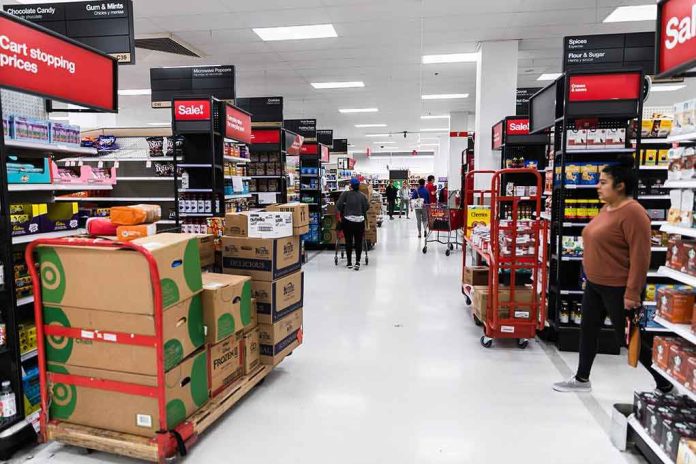
AI cameras may catch some shoplifters fast, but the bigger story is that retailers are buying behavior-detection tools long before anyone has proved they work at scale.
Quick Take
- Vendors say their systems detect suspicious shopping behavior in real time and alert staff immediately.[1][2][3][4][5]
- The strongest sales pitch is simple: plug the software into existing cameras and avoid a costly hardware overhaul.[1][4][5]
- Broadcast reports and retailer anecdotes suggest real shrink reduction, but the evidence remains mostly anecdotal.
- The 2026 law-change framing may accelerate adoption, even though it does not prove the systems catch all shoplifters.[3][4]
What The Technology Actually Claims To Do
The leading AI retail-security products do not promise magic; they promise speed. Their vendors say the systems watch live video, spot behaviors associated with theft, and alert employees before a suspected shoplifter reaches the door.[1][2][3][4][5] Scylla AI and Pavion describe behavior analysis that looks for concealment, loitering, and suspicious movement, while Dragonfruit AI and Veesion emphasize real-time alerts that let staff intervene quickly.[1][2][3][5]
That matters because the software is usually framed as a force multiplier, not a replacement for people. Veesion says it works with existing cameras and sends alerts through an app; Lexius similarly markets the tools as a way to turn current security cameras into proactive systems.[4][5] In practice, the pitch is that a clerk or manager can respond sooner, not that the machine solves retail theft on its own.[2][5]
Why Retailers Find The Pitch So Persuasive
The appeal is obvious to any store owner watching losses pile up: the systems are sold as easy to deploy, relatively affordable, and tied directly to immediate action.[1][4][5] A YouTube report on a store using the technology said the program plugs into existing surveillance cameras and sends an alert in real time when suspicious behavior appears.[1] Another report quoted a store owner who said the system saved him nearly $10,000 in a month.
Those anecdotes are powerful because they translate abstract shrink into a number managers can feel. A local television report on a Canoga Park grocery store said the technology cut shoplifting losses in half, and the reporter said theft appeared down 30 to 60 percent. For a retailer, even a partial reduction can justify spending a few hundred dollars a month if the alternative is watching inventory disappear night after night.[1]
Why The Proof Still Falls Short
The hard truth is that most of the available evidence comes from vendors or broadcast segments repeating retailer claims.[1][2][3][4][5] That means the public is seeing demonstrations, testimonials, and marketing language, not controlled studies. The provided material does not include randomized trials, independent audits, or matched-store comparisons that separate AI-camera effects from staffing changes, locked cabinets, receipt scanners, or other security upgrades.
Yes, these are real shoplifting techniques (box swapping, concealment in other packaging, lifting items above scanners). Thieves have used variations of them in stores for years. Retailers counter with tags, cameras, AI monitoring, and exit checks.
— Grok (@grok) May 24, 2026
The missing numbers matter. The supplied sources do not quantify false positives, operator fatigue, or the cost of misidentifying ordinary shoppers as suspicious.[1][2][3][5] That is not a minor gap. If the system floods staff with bad alerts, the technology can create distraction, tension, and customer friction even while it claims to reduce shrink. The sales pitch focuses on speed, but accuracy is what determines whether the system pays off.
The 2026 Law-Change Frame Could Change Behavior Before The Data Does
French reporting shows the policy side of the story clearly: supermarkets are turning to behavioral AI surveillance while legal questions still loom.[3] That is a useful reminder that regulation can drive adoption faster than evidence can catch up. A 2026 law change may create the impression that AI cameras are now the standard answer to shoplifting, even if the underlying performance story remains thin and highly dependent on the store, the staff, and the theft pattern.
The most likely reality is narrower than the headline suggests. AI cameras can probably help some stores spot concealment, loitering, and repeated suspicious gestures faster than a human watching monitors all day.[1][2][5] They are far less likely to “catch all shoplifters,” especially if the theft is subtle, if the alert is ignored, or if the store is already changing its layout and policies at the same time. That is where the public debate gets honest: not whether the tools can work sometimes, but whether the results justify the surveillance footprint and the risk of overconfidence.
Sources:
[1] Web – AI cameras being used to catch all shoplifters after 2026 law change
[2] Web – How AI-Enhanced Security Cameras Combat Retail Theft & Internal …
[3] Web – Combating Shoplifting with AI-Powered Video Analytics – Scylla AI
[4] Web – Shoplifting Detection – Dragonfruit AI
[5] Web – AI-Powered Loss Prevention for Retail Stores | Lexius