

In Madison’s latest police shooting, a homeless man is dead, an officer is hurt, and a city already distrustful of government power is erupting in anger.
Story Snapshot
- Police say 38-year-old Corey Ruiz pulled a knife, injured an officer, and was then shot during an arrest struggle.
- Bystander video shows officers tasing Ruiz and then firing at close range as he is on or near the ground, fueling outrage and protests.
- Wisconsin’s Department of Justice has opened a homicide investigation, and all four involved officers are on administrative leave.
- Ruiz’s death taps into wider fears on the left and right that government systems are failing and accountability depends on public pressure, not official promises.
What Police Say Happened on a Madison Street Corner
Madison police say the incident started with calls about a man “checking parked vehicles” on the city’s near east side early Wednesday afternoon. Officers identified the man as 38-year-old **Corey Ruiz**, a homeless resident, and moved in after he rode away on a bicycle through nearby yards. Police Chief John Patterson and city officials say four officers surrounded Ruiz, tried to arrest him, and a struggle broke out. During that struggle, they say Ruiz pulled a fixed-blade knife and injured one of the officers.
Officials say another officer then tried “less-lethal” force, deploying a Taser that failed to stop Ruiz. According to the police account, the injured officer, now facing a man with a knife at close range, fired three shots at Ruiz. Ruiz was taken to a hospital, where he died from his wounds. The city has stressed that the officers did not start out planning to shoot, but instead reacted to a fast-moving fight where they say a weapon suddenly appeared and an officer was hurt.
What Videos Show and Why Many People Are Furious
Short cell phone clips from bystanders tell a harsher story and are driving much of the outrage. One witness described seeing three officers wrestle with Ruiz before anyone mentioned a knife. In that account, an officer shouts “he’s got a knife,” a second officer pulls a Taser, yells “taser, taser, taser” and fires it. All three men then tumble to the ground. Seconds later, the witness says, one officer rises to a knee and shoots Ruiz three times in the head “point blank” while Ruiz is on the ground.
National outlets have replayed similar video angles, showing a swarm of officers, a Taser deployment, and then sudden gunfire at very close range. Civil rights attorney Ben Crump, now representing Ruiz’s family, is calling the shooting an “execution” and demanding charges. Family members say Ruiz was on his knees with his hands controlled when the shots were fired, a claim that, if supported, clashes directly with the idea that he was an active knife threat at that exact moment. With no body cameras on Madison officers, these clips and statements are the main public window into the struggle.
Official Investigation and Deepening Public Distrust
Because a police officer killed Ruiz, the Wisconsin Department of Justice Division of Criminal Investigation is treating the case as a **homicide investigation**, not a routine review. All four involved officers have been placed on administrative leave while state investigators gather evidence, interview witnesses, and study the many videos from the scene. City leaders are promising transparency and listening sessions, and have said they will not “hide from any aspect of this investigation.” For many residents, especially those who remember earlier police controversies, such promises now feel like standard script, not firm proof.
The Madison, Wisconsin, press conference centered on the fatal police shooting of 38-year-old Corey Ruiz, who was killed during an attempted arrest on July 22.
According to Madison Police Chief John Patterson, officers were responding to reports of a man trying to enter… pic.twitter.com/CBhr88Awsy
— Mighty News (@Mighty__News) July 25, 2026
Civil rights groups, including the Legal Defense Fund, are demanding release of all footage, the autopsy, and the full state investigative file when it is complete. They argue that only detailed forensic work on the knife, the officer’s wound, and the bullet paths can show whether deadly force was truly needed. National data on police use of force already shows that deadly incidents are a small share of police encounters, yet still number in the hundreds each year, often in fast fights over guns or knives. Ruiz’s case fits that pattern of tense struggle plus scant early evidence, where public debate turns bitter long before the science and law catch up.
Protests, Shared Frustration, and the Bigger Question About Power
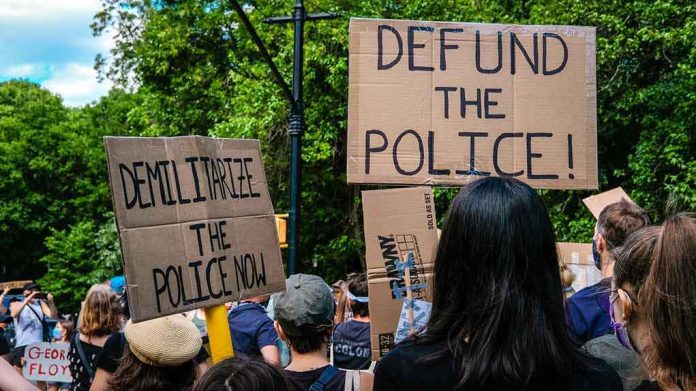
Within hours of the shooting, protesters filled Madison streets, blocking intersections and confronting officials at news conferences. Some marchers say police are too quick to kill, especially when dealing with poor, homeless, or Black residents. Others, including some online voices, argue police had “no choice” once a knife came out and an officer was cut. Underneath those sharp differences is a shared feeling among many Americans that the government rarely faces real consequences when it fails the people it is supposed to protect.
Older conservatives in Madison see this case as another sign that public safety systems are broken, after years of rising costs, visible homelessness, and crime worries. Older liberals see yet another example of what they view as a deadly double standard for minorities and the poor. Both sides are tired of hearings, task forces, and “independent reviews” that drag on while families grieve and trust erodes. The fight over what happened to Corey Ruiz is not just about one desperate struggle on a street corner. It is about whether any part of the system—police, city hall, or state justice officials—will prove it still deserves the power it holds.
Sources:
thegatewaypundit.com, abcnews.com, bbc.com, wpr.org, cityofmadison.com, wsws.org, urbanmilwaukee.com, youtube.com, instagram.com, captimes.com