

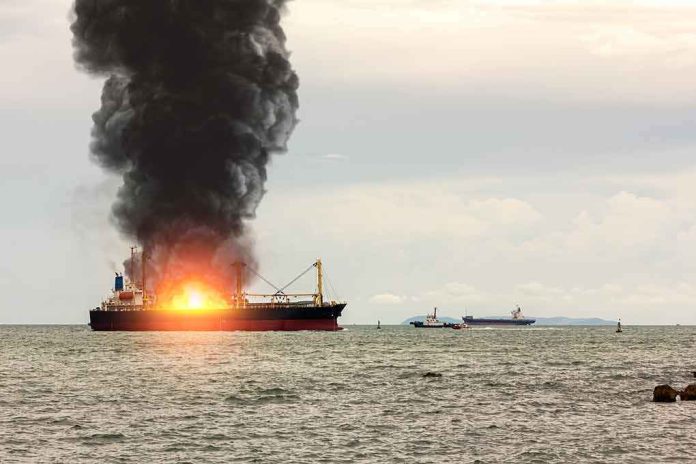
U.S. Central Command released video of an Iranian oil tanker sinking after American strikes, signaling a sharp new phase in the fight over the Strait of Hormuz.
Story Snapshot
- CENTCOM says the strikes answered recent Iranian attacks on commercial ships.
- U.S. operations targeted Iranian military and maritime assets over multiple nights.
- Iran calls the strikes aggression and vows a “crushing” response.
- The Strait of Hormuz remains a volatile chokepoint with high global stakes.
What The U.S. Military Says Happened
U.S. Central Command said American forces struck Iranian targets after Iran attacked commercial shipping near the Strait of Hormuz. The command framed the action as direct retaliation to protect freedom of navigation and deter more attacks. Later statements described further waves of precision strikes on Iranian military infrastructure meant to reduce Iran’s ability to hit ships moving oil and goods through the corridor. CENTCOM also shared video showing an Iranian tanker on fire and sinking after the latest strikes.
U.S. statements emphasized that targets included coastal surveillance, command sites, and maritime tools used to threaten vessels in and near the strait. The messaging underscored continuity: repeated, controlled operations aimed at specific military capabilities rather than broad civilian infrastructure. Officials said these actions intend to uphold shipping security in one of the world’s most important trade lanes, where even short disruptions can raise prices and rattle markets.
How Iran Is Responding And Framing The Fight
Iran’s top military command called the U.S. actions a “blatant act of aggression” and warned of a “crushing response” if attacks continue. Iranian officials argued that the strikes violated a ceasefire and international law. They portrayed their own counterattacks as self-defense against U.S. violations and said they targeted U.S.-linked military sites in response. Iranian state messaging also claimed action against several ships, tying it to U.S. strikes on Iranian tankers.
These competing messages aim to shape global views. Washington says it is defending shipping and deterring attacks. Tehran says it is resisting interference in managing the strait and responding to unlawful force. The result is a steady climb in risk. Threats to expand attacks to regional “infrastructure” raise fears of a wider conflict that could hit energy flows and local economies far from the Gulf.
Why The Strait Of Hormuz Turns Fires Into Storms
The Strait of Hormuz is narrow, busy, and vital. A large share of the world’s oil and liquefied natural gas moves through it. History shows that mines, drones, and fast boats can cause big shocks with small tools. During the late 1980s “tanker war,” strikes on ships and infrastructure caused sharp spikes in danger and costs. Today, even brief attacks force shippers to reroute, pay more for insurance, and pass higher prices to families and small businesses.
The United States Central Command (CENTCOM) has released footage showing the MT Kylo, a Comoros-flagged Iranian oil tanker, sinking in the Gulf of Oman following a US military strike.
The vessel sank after its crew evacuated, according to CENTCOM, as military tensions between… pic.twitter.com/E7HhD46SD1
— The CSR Journal (@thecsrjournal) September 6, 2026
Analysts often describe Iran’s approach as raising risk without a full blockade, creating doubt and pressure at a low cost. That pattern makes quick, clear attribution hard and pushes rivals toward action to show control. The United States argues that steady, precise strikes can limit that risk and keep trade moving. Iran counters that U.S. force is the cause of the crisis and says it will escalate until Washington stops.
What This Means For Americans Watching At Home
Energy shocks hit first and hardest at the pump and on utility bills. Many Americans already feel squeezed by high prices and worry that leaders in Washington do not manage crises well. When a few missiles or mines can rattle global supply chains, the public expects plans that protect shipping without dragging the country into a larger war. Clear goals, legal grounds, and limits matter if the government wants trust during fast-moving fights abroad.
Both sides in U.S. politics share a fear that distant decisions by elites can raise costs and risks for everyday people. This clash tests those fears. The U.S. says it is acting to secure trade routes and protect crews on civilian ships. Iran says it will answer force with force and threatens wider damage if pressed. As the videos of a sinking tanker spread, the core question remains simple: can leaders keep the strait open and the conflict contained?
Sources:
thegatewaypundit.com, centcom.mil, reuters.com