

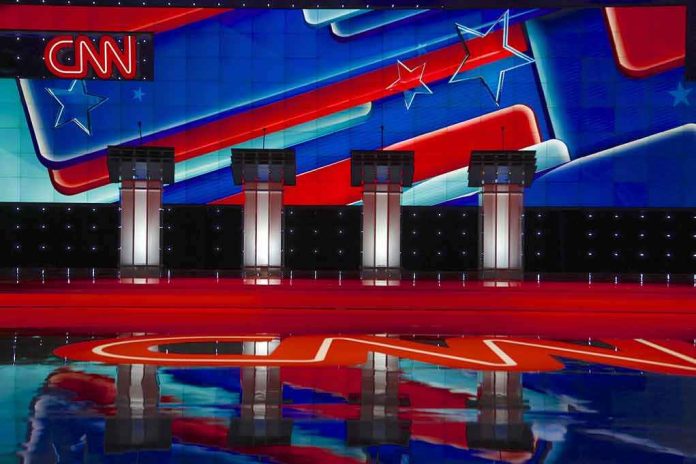
A sitting senator told voters she was “not that informed on national security” when asked about Taiwan and the South China Sea, then repeated the line afterward, turning a debate moment into the race’s defining test of readiness.
Story Highlights
- Sen. Darline Graham declined to answer a Taiwan/South China Sea question, citing limited national-security knowledge.
- Graham later repeated that national security is “not my thing,” confirming the phrasing after the event.
- Coverage also flagged her incorrect claim of “50 million” people in South Carolina; the state has about 5.6 million.
- The exchange came in a wide-ranging, policy-heavy forum that included China and national security topics.
Debate Moment That Sparked the Backlash
Moderator Greta Van Susteren asked whether Taiwan and the South China Sea are national security issues for the United States. Sen. Darline Graham answered that she was “not that informed on national security” and did not directly address the question. Multiple outlets framed the reply as a stumble that exposed a weak spot in her résumé and command of foreign policy. CNN reported the clip and language as a central moment in the debate.
Reporters and commentators highlighted how quickly the moment spread online and on television. The focus stayed on Graham’s refusal to tackle a core China-related topic and her stated lack of expertise. The attention landed one week before a high-stakes runoff, adding pressure on a campaign already defined by comparisons to more seasoned lawmakers. The Associated Press described her as tripped up by the national security question, reinforcing the on-stage impression.
(Jewish Insider) Senator Darline Graham, at debate: “National security is not my thing”
Sen. Darline Graham (R-SC) said at the final GOP primary debate to replace the late Sen. Lindsey Graham (R-SC), one of Congress’ most engaged members on foreign policy, that she is “not that… pic.twitter.com/n8PJEzA3nr
— Politics & Poll Tracker 📡 (@PollTracker2024) August 19, 2026
Post-Debate Comments and Confirmation
After the debate, Graham did not walk back her remark. In a follow-up clip, she again said national security was “not my thing,” describing it as outside her expertise. That repeat removed doubts that the quote was a bad transcription or an edit taken out of context. The restatement also kept the story in rotation for another news cycle and raised fresh questions about preparedness on fast-moving issues involving China and the region.
The moment occurred in a forum that covered major policy areas, including national security and China. The Newsmax debate program listed a broad agenda: the economy, debt, Social Security, Medicare, immigration, national security, Iran, Israel, China, and artificial intelligence. That setting signaled that the question was not a surprise detour but part of the expected range for a statewide candidate, especially with rising tensions in Asia and election-year scrutiny of foreign policy.
Basic Facts Slip on State Population
Coverage also noted a separate factual mistake. Graham said there were “50 million” people in South Carolina, well above the actual figure of about 5.6 million. NBC News and others flagged the error as a basic numbers miss that compounded concerns about readiness. While single misstatements can happen to any candidate, the pairing of a foreign policy admission with a glaring number error made the debate fallout harder for her team to contain in the short term.
The Taiwan and South China Sea question touches direct United States interests. The Congressional Research Service has detailed how those waters and the Taiwan Strait sit inside a larger contest with China over security, trade routes, and regional stability. That context explains why moderators press candidates on these topics and why voters look for clear answers on defense commitments, deterrence, and economic risk tied to shipping lanes and alliances in Asia.
Why This Landed With Voters Across the Spectrum
Voters in both parties worry that leaders are not prepared on big issues. Many feel Washington is run by insiders who protect their jobs and donors while missing urgent threats at home and abroad. A senator saying she is not informed on national security, even if candid, cuts against that need for competence. It also feeds the sense that the political class is not doing the homework on matters that shape prices, supply chains, and the safety of United States troops and allies.
Scholars and past election research show how one debate clip can shape a race. Modern debate coverage often elevates a standout moment over longer policy answers. That dynamic helps explain the fast spread of Graham’s quote and the way it became a symbol for readiness. The pressure now shifts to follow-up events, where campaigns try to reset with tighter answers and clear plans on security and China, while opponents try to lock in the first impression.
What to Watch Next
Campaigns often respond to stumbles by rolling out issue briefings, surrogate validators, and policy pages. Watch whether Graham presents a sharper plan on Taiwan, South China Sea navigation, and China trade enforcement. Look for new debate prep signals, such as town halls focused on defense and foreign policy. Also track whether the population error is framed by her team as a slip or addressed with a data-driven pitch on growth, infrastructure, and cost of living tied to accurate state numbers.
Sources:
youtube.com, nytimes.com, apnews.com, research.nus.edu.sg