

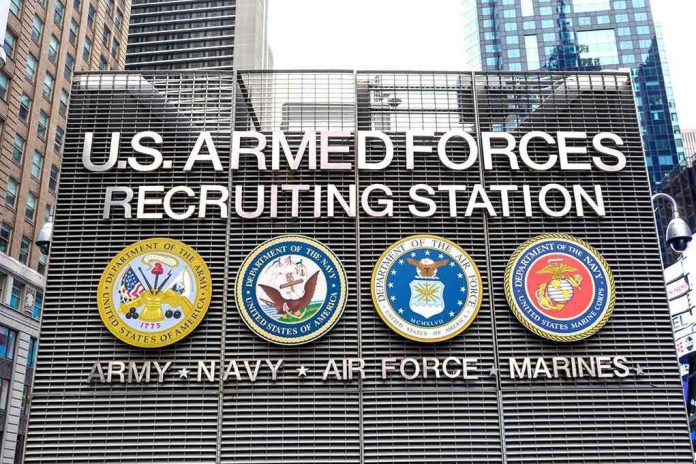
At the very moment many Americans say Washington is failing them, the U.S. military is quietly posting its strongest recruiting numbers in 15 years.
Story Snapshot
- All five active-duty branches met or beat their fiscal 2025 recruiting goals, hitting a 15-year high.
- The Army, Navy, Air Force, Marine Corps, and Space Force collectively reached about 103% of their missions.
- Recruiting surged after years of shortfalls tied to COVID, a tight job market, and deep public mistrust.
- Pay raises, new prep programs, and more aggressive outreach helped bring in 200,000+ recruits in 2024 and even more in 2025.
Recruiting Hits a 15-Year High Across All Branches
The Defense Department reports that fiscal year 2025 brought the strongest recruiting performance in about 15 years, with all active-duty branches meeting or exceeding their goals. The Army set a target of 61,000 recruits and signed up 62,050, while the Navy aimed for 40,600 and brought in 44,096 sailors. The Air Force met its 30,100 goal with 30,166 recruits, the Marine Corps hit its 26,600 target exactly, and the Space Force passed its 796 goal with 819 new Guardians. Taken together, the five branches reached roughly 103% of their active-duty mission for the year.
This surge did not appear out of nowhere. After four decades of overall enlistment decline and a low point in 2022, the Pentagon saw a 14% jump in total enlistments by 2024. That year, defense officials said 146,473 people joined the armed forces, and by April 2025 every branch except Space Force was already on pace to meet or exceed its annual targets. Those early numbers pointed to the rebound now confirmed in the final 2025 totals, ending a streak in which the Army in particular had missed its goals by double digits.
From Recruiting Crisis to “Comeback”
Only a few years ago, military leaders warned of a recruiting crisis driven by low unemployment, COVID shutdowns in schools, and a growing gap between the military and civilian life. The Army missed its goals by roughly 25% in 2022 and 10% in 2023, and other branches also struggled, calling those years some of the hardest since the end of the draft. That context matters now that officials and commentators are talking about a “great recruitment comeback,” because the current success follows a clear period of failure and frustration, not steady strength.
By 2024 and 2025, multiple changes helped turn the numbers around. A Pentagon briefing notes that total accessions rose from about 200,000 in 2023 to 225,000 in 2024, a 12.5% increase in one year. Analysts point to larger pay raises, enlistment bonuses, and more recruiters, along with smarter marketing and more flexible but screened waivers for age, weight, and test scores. The Army’s Future Soldier Preparatory Course, started in 2022, helped borderline applicants improve fitness and academics so they could meet standards instead of being turned away.
Why Young Americans Are Saying “Yes” Again
Economic pressure is one straightforward driver. Reports on the surge say a softer job market and worry about long-term economic security pushed more young people to look at the military as a stable path with health care, housing, and education benefits. Record pay raises over several years added to that appeal, making base pay compare better with many civilian jobs. For families who feel locked out of the American Dream by high costs and unstable work, the military can look like one of the few institutions still offering a clear ladder up.
Culture and politics also play a role, and they divide opinion. Officials in the Trump administration and some conservative voices argue that a renewed focus on “warrior ethos” and cutting back on diversity and inclusion programs sparked more patriotism and interest in service. Other analysts credit less ideological steps, such as reorganizing recruiting commands, investing in school outreach, and improving how recruiters follow up with interested students. Both sides agree on one point: the military could not afford to fail at recruiting year after year, so it threw real money and attention at the problem.
Lingering Concerns Beneath the Positive Headlines
Behind the upbeat numbers, there are still warning signs. Official data show that while entry-level enlistments have risen since 2022, they remain about 8.8% lower than a decade ago. The Army Reserve and some special operations recruiting units still fall short of their missions. Demographic trends, including a shrinking pool of teenagers and rising obesity rates, continue to limit who is even eligible to serve. These pressures suggest that the current surge may be hard to sustain without deeper changes in how the country prepares young people for adulthood.
Sources:
facebook.com, washingtontimes.com, militarytimes.com, army.mil, youtube.com, fox.com, reddit.com, pmc.ncbi.nlm.nih.gov, recruiting.army.mil