

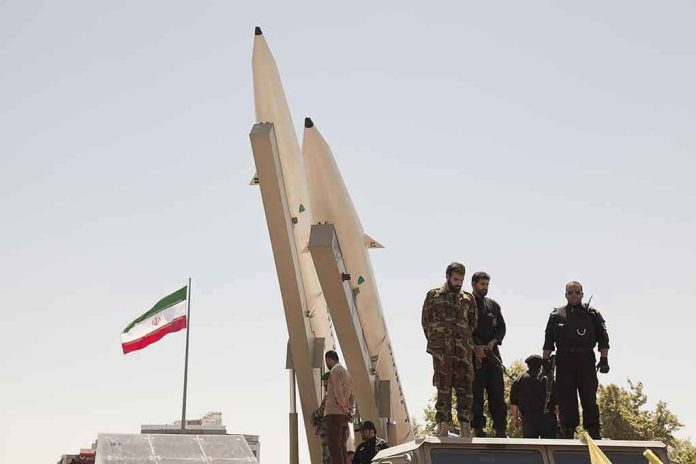
Iran’s top negotiator warned that Washington “seeks to start a new war” and vowed a “forceful response,” but the public record so far offers rhetoric, not proof. [1][3]
Story Snapshot
- Mohammad Bagher Ghalibaf said the United States aims to trigger a new conflict and that Iran is preparing a strong retaliation. [1][3]
- Coverage ties his remarks to economic pressure and talk of a naval squeeze, framing a coercive campaign rather than diplomacy. [1][2]
- No primary U.S. or Israeli documents in the public domain confirm renewed attack planning. [1][2][3]
- The gap between Iran’s warning and verifiable evidence keeps markets and militaries on edge.
What Ghalibaf Said And Why It Landed With A Thud
Mohammad Bagher Ghalibaf, identified in reports as Iran’s chief negotiator and parliament speaker, stated that the United States is seeking to “start a new war” and that Iran must prepare an “effective and forceful response” to any potential attack. [1][3] One outlet linked his warning to continued economic pressure and a purported naval blockade since April 13, casting the moment as coercion dressed as diplomacy. [2] The message hit familiar notes: deterrence language, domestic resolve, and a promise to retaliate across the region if struck. [1][2][3]
The claim arrives in a well-worn playbook. Iran’s leaders often pair negotiation talk with battle-readiness to signal red lines to rivals and steel the home front. The posture also tries to shape outside risk calculus by suggesting any strike will cost more than it buys. That signaling logic has precedent, but the present record remains thin. The stories quote Ghalibaf and describe context; they do not provide corroborating documents, military directives, or verified intelligence showing U.S. or Israeli attack preparation. [1][2][3]
Evidence On The Table Versus What Is Missing
The public record shows on-the-record statements by a named official, which carry weight as Iran’s declared stance. [1][3] It also shows press descriptions of pressure tools, including a reference to a naval blockade, though without maritime notices, ship-tracking data, or insurer advisories to validate the claim. [2] What is absent matters more: no declassified assessments, no official orders, and no primary-source Israeli or U.S. documents confirming preparations for renewed strikes on Iran. In short, posture is documented; planning is not. [1][2][3]
Secondary coverage acknowledges that Ghalibaf’s words are his allegation, not independent verification. [1][2][3] That distinction should guide judgment. An assertion can be consequential without being proven; markets can move on headlines and forces can adjust readiness based on signaling alone. Yet responsible assessment requires separating what Iran says it fears from what public evidence confirms. The difference between deterrent talk and operational reality is the gap where miscalculation often lives.
How To Read The Rhetoric Without Getting Played
Washington and Jerusalem rarely publish operational plans, which makes definitive public rebuttals unlikely even if the allegation is overstated. That opacity, however, does not convert accusation into fact. Conservative common sense asks for receipts: original transcripts in Persian, satellite-verified force movements, naval notices, or financial risk circulars consistent with blockade enforcement. Without those, treat the statement as a pressure tool calibrated for leverage at the bargaining table and for credibility among Iran’s domestic audience. [1][2][3]
Mohammad Bagher Ghalibaf urged Iran to boost security readiness, warning the country must stay prepared for any possible attack.
He said Iranian forces are “ready for all options” as regional tensions rise. pic.twitter.com/YKtoErG9Kl
— Villiam_Reporter🏅 (@VilliamReportsX) May 20, 2026
Practical markers can still be tracked. If carrier strike groups surge into chokepoints, if regional air defenses shift to higher alert and stay there, if commercial shipping reroutes in sustained patterns with insurer surcharges spiking, those data points speak louder than a podium quote. Conversely, if deployments remain routine and maritime flows persist with only episodic diversions, that undercuts claims of imminent attack planning. The present reporting does not settle these questions; it raises them. [1][2]
What This Means For U.S. Policy And Regional Stability
Policy should avoid two equal and opposite errors: dismissing Tehran’s threats as mere bluster or swallowing them whole as inevitabilities. Deterrence holds when lines are credible and responses proportionate; it fails when rhetoric outruns capability or when capability moves without clear communication. The United States should keep channels open to reduce misread signals, maintain visible but non-provocative readiness, and demand verifiable evidence before recalibrating strategy. Iran’s statement seeks to define the risk. Evidence, not headlines, should. [1][2][3]
Sources:
[1] Web – Iran says US seeking to ‘start new war,’ warns of ‘forceful response’
[2] Web – Iran Warns of New War Amid Escalating Tensions with US
[3] Web – Iran chief negotiator Ghalibaf says US ‘seeks to start new war’