

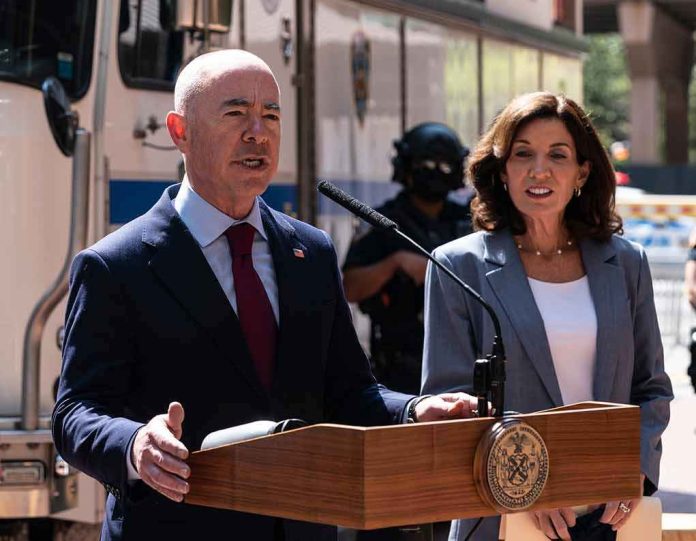
New York’s wealth debate now turns on a simple fact: Governor Kathy Hochul says the millionaire flight was driven by Trump-era tax changes and COVID, while other data says the tax story is far weaker than that.
Quick Take
- Hochul linked millionaire departures to the 2017 federal State and Local Tax deduction repeal and the pandemic.
- She said New York should not raise taxes on high-net-worth individuals and should try to win some of them back.
- The Fiscal Policy Institute says wealthy out-migration rose during COVID, then returned to pre-pandemic levels by 2022.
- The same data says more than 75 percent of wealthy pandemic movers went to other high-tax states.
Hochul’s Case: Taxes, COVID, and Remote Work
Hochul used a recent interview to argue that New York’s wealthy departures were shaped by forces outside Albany’s control. She pointed to the 2017 repeal of the State and Local Tax deduction, which she said raised the cost of living for New Yorkers. She also said the pandemic pushed people out and that remote work “changed everything,” because high earners were no longer tied to an office in Manhattan.
She also rejected the idea that New York should answer the loss by taxing rich residents more. Hochul said she does not want to raise taxes on high-net-worth individuals and argued that the state needs those people back. In her telling, New York’s tax base was eroded, and wealthy residents should help support the public programs the state wants to keep funding.
NYC Mayoral Candidate Zohran Mamdani's Tax Plan Sparks Debate as Report Warns of Wealthy Residents Leaving New York
A new report has raised concerns that New York could lose billions of dollars in tax revenue if more high-income residents leave the state, as New York City mayoral… pic.twitter.com/F8e0EP567Z— Voice of Germany (@NewsVOG) July 16, 2026
What the Data Says About the Exodus
The strongest counterpoint comes from the Fiscal Policy Institute, which found no significant rise in millionaire departures after New York’s 2017 and 2021 tax changes. Its 2023 report said more than 75 percent of wealthy people who left during the pandemic moved to other high-tax states, including Connecticut, New Jersey, and California. That pattern cuts against the idea that most of the exodus was a simple run toward lower taxes.
The same research says the pandemic out-migration was temporary. It found that millionaire migration rates returned to pre-COVID levels by 2022, and that the top 1 percent left New York at a low rate even in normal years. In plain terms, the numbers support a short-term disruption more than a lasting tax revolt. That matters because Hochul’s comments treat the loss as a structural warning for the state budget.
Why This Fight Matters in Albany
New York’s political fight over wealthy residents is not just about millionaires. It is also about who pays for state government and how much room leaders have to raise revenue. Hochul’s position reflects a warning that large taxpayers can leave when rules change. The Fiscal Policy Institute’s view is different: it says the pandemic, remote work, and social disruption mattered more than state tax policy.
That split leaves both parties with uncomfortable facts. Democrats who want higher taxes must face the risk of losing more of the tax base. Republicans who frame every departure as proof that taxes alone drive migration must deal with data showing many wealthy movers stayed in high-tax states. The result is a familiar New York problem: leaders need the money, but the people paying it can move faster than the state can adapt.
Sources:
redstate.com, foxnews.com, finance.yahoo.com