

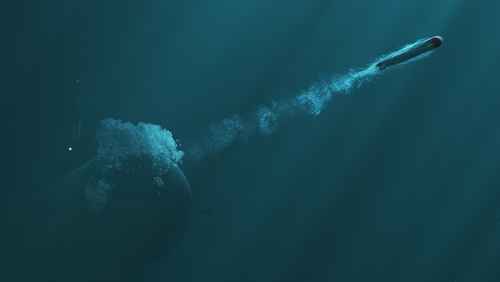
The U.S. Navy has turned a Virginia-class attack submarine into a working underwater drone launch pad, and it did so after years of trials.
Quick Take
- The USS Delaware completed the first forward-deployed torpedo tube launch and recovery of an unmanned underwater vehicle to finish a tactical mission.
- The Navy said the same vehicle flew three sorties in June 2025, each lasting about six to 10 hours.
- The tests showed the submarine could launch and recover the drone without divers, which is a major step for undersea operations.
- Earlier Navy work on this mission path went through multiple rounds of development before this result.
USS Delaware Delivers the First Tactical Success
The headline event came in June 2025, when the USS Delaware completed a forward-deployed torpedo tube launch and recovery of a Yellow Moray unmanned underwater vehicle. The Navy said the mission achieved a tactical objective and marked the first time a submarine had done this from a deployed position. Reports also said the same vehicle completed three sorties, which helped show the system could be used more than once in the field.
This was more than a simple demo. The Navy said the operation happened without divers and used the submarine’s torpedo tube rather than a dedicated hangar or support ship. That matters because the easier a system is to launch and recover, the more useful it becomes for real missions such as seabed mapping, mine detection, and intelligence gathering. The test also pointed to a lower-risk way to extend submarine reach without exposing crews.
What the Navy Was Trying to Prove
The Yellow Moray effort focused on a practical problem: how to move an unmanned underwater vehicle in and out of a submerged attack submarine through the same tube used for weapons. The Navy and its partners wanted a setup that could use the torpedo tube for launch and recovery, not just launch. Earlier reporting said the Razorback and REMUS family of vehicles were part of this broader push to make submarines carry, recover, and reuse underwater drones more efficiently.
That goal fits a larger shift in undersea warfare. The Navy has been moving toward submarine-drone teaming because small autonomous vehicles can enter places too risky for crewed platforms. In this case, the value is not only the drone itself but the submarine as a hidden base for repeated unmanned missions. The Navy’s own report framed the success as a way to open more mission options with less risk to personnel.
Why It Took Multiple Tries
The path to this point was not quick. Earlier Navy and industry work focused on making a medium unmanned underwater vehicle easier to launch and recover through a submarine’s torpedo tube, and the program went through repeated development steps before the June 2025 result. One later report said the Navy had already completed earlier tests and then refined the system further, which suggests a slow move from concept to operational use rather than a single breakthrough moment.
That slow pace reflects a familiar defense pattern. The public often hears about a successful trial before the hard part is done: making the system dependable, repeatable, and ready for wider fleet use. The Delaware test clearly showed progress, but it did not prove the Navy has finished every problem tied to maintenance, deployment, or scale. It did show that the basic idea now works in the water, in deployment conditions, and without diver help.
What This Means for the Fleet
If the Navy can repeat this result on more submarines, attack boats could become stealthy carriers for underwater drones. That would give commanders more eyes and more reach in contested waters. It would also let the Navy send robots into areas where sending sailors is too dangerous or too costly. For readers worried about government waste, the other side of the story is clear too: the Pentagon still has to prove that this kind of innovation can move from a successful test to a broad, reliable fielded capability.
The Navy has not said the mission is fully solved for every class of submarine or every unmanned vehicle. But the Delaware result gives the service a strong proof point after years of work. It also strengthens the case for pairing nuclear attack submarines with reusable unmanned systems, a move that could reshape how the United States uses undersea power in future conflicts.
Sources:
19fortyfive.com, navalnews.com, mrcds.com, news.usni.org, twz.com, reddit.com, dtic.minsky.ai