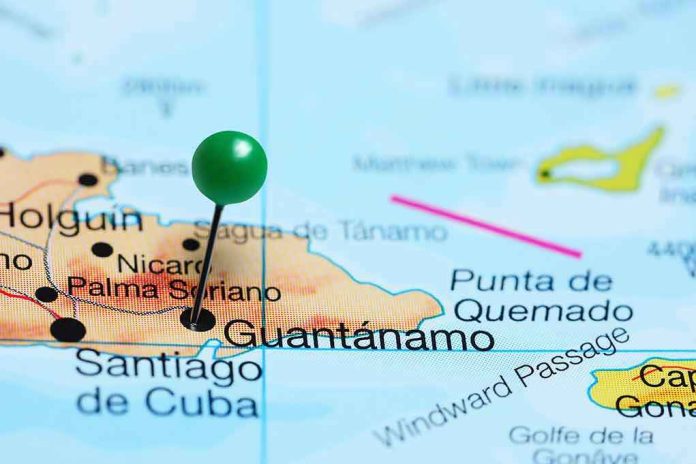
Cuba’s communist regime just admitted what decades of leftist “experts” refused to acknowledge: their socialist paradise is collapsing under the weight of its own catastrophic mismanagement, with President Díaz-Canel desperately calling for “urgent” economic transformations as the island runs out of oil and hope.
Story Highlights
- Cuban President Díaz-Canel admits government responsibility and demands “immediate” economic model changes as oil reserves near depletion in March 2026
- GDP has plunged 15% over five years with inflation hitting 70%, worse than the 1990s Soviet collapse era
- Military-controlled GAESA conglomerate prioritized luxury hotels over food and energy, fueling public resentment
- U.S. oil blockade and Venezuela’s fall expose decades of communist central planning failures that destroyed once-prosperous economy
Regime’s Own Words Expose Socialist Failure
President Miguel Díaz-Canel’s March 2026 address to the Council of Ministers marks a rare moment of truth from Cuba’s communist leadership. Calling for “immediate” transformations to the island’s economic and social model, Díaz-Canel acknowledged government failures while pushing business autonomy, state downsizing, and foreign investment. Prime Minister Manuel Marrero Cruz prioritized food production and power grid repairs amid persistent blackouts. These admissions bypass the usual blame game leftist commentators play regarding U.S. sanctions, revealing the regime’s recognition that decades of socialist central planning have driven Cuba into its worst crisis yet.
Economic Devastation Worse Than Cold War Era
Cuba’s economy has collapsed under communist policies that transformed a once-prosperous nation into a basket case. GDP per capita stood 80% above Latin American peers in 1955 before Castro’s revolution; today it languishes below regional averages. The current crisis surpasses even the 1990s “Special Period” following Soviet collapse. Official regime data shows GDP dropped 5% in 2025 alone, totaling 15% losses over five years. Independent experts estimate inflation between 14% officially to 70% privately. Sugar production, once 8 million tons in 1989, has cratered to just 200,000 tons in 2025, epitomizing agricultural destruction under state control.
Military Elite Prospers While Citizens Suffer
Leaked documents from August 2025 exposed how the GAESA military conglomerate controls 40-55% of Cuba’s tourism sector, retail operations, and ports while hoarding $4.3 billion in reserves. This military elite prioritized building luxury hotels like the empty $200 million Tower K instead of addressing food shortages and energy infrastructure collapse. Cubans endure persistent blackouts initiated by October 2024’s nationwide power failure, with the regime producing only one-third of its oil needs. Airlines suspended service due to fuel shortages, tourism collapsed with hotels closing and foreign visitors evacuated, costing $8 billion in lost revenue from March 2024 to February 2025.
U.S. Pressure Accelerates Communist Reckoning
The Trump administration’s January 2026 actions—Executive Order 14380 imposing tariffs on Cuba’s oil suppliers and military operations halting Venezuelan shipments—intensified pressure on the failing regime. U.S. officials warned Cuba to “make a deal before it’s too late” as oil reserves approached exhaustion by late March. While some critics focus on sanctions, the Cato Institute correctly identifies the crisis as self-induced by communist policies since 1959. Venezuela’s collapse as Cuba’s primary oil supplier merely exposed infrastructure neglect and central planning failures that left 1.4 million Cubans fleeing between 2019 and 2024, voting with their feet against socialism’s broken promises.
Sources:
Cuba’s Self-Induced Crisis May Be Its Worst Yet – Cato Institute
Cuba’s president pushes for ‘urgent’ changes to island’s economic and business model – WTOP
Cuba’s economy and stability are shaken by the Venezuela crisis – Le Monde
Pressure on Havana is mounting. What comes next for Cuba matters – Bush Center
Crisis in the Cuban Economy: Notes for an Evaluation – Horizonte Cubano
Cuba – World Report 2026 – Human Rights Watch