

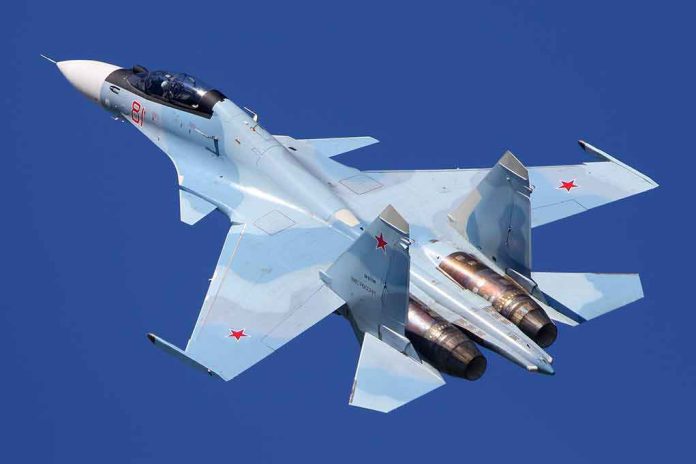
Two U.S. airmen were rescued from inside Iran after their F-15E was shot down during a combat mission, underscoring how a month into the war, even America’s top jets can still be knocked from the sky.
Story Highlights
- U.S. officials confirmed an American F-15E was shot down over Iran and both airmen were rescued alive.
- The rescue ended a tense search-and-recovery that spanned hostile terrain and active threats.
- The loss marked the first known U.S. fighter downing over Iran in this conflict, raising stakes for future missions.
- Reports differ on the exact date and the weapon used, reflecting the fog of war.
What Happened: A U.S. Fighter Downed Over Iran
Reuters reported that a U.S. fighter jet was shot down over Iran, and that search teams recovered one of two crew members who ejected, later followed by the second rescue. The U.S. Air Force said U.S. forces completed rescues of two American service members from Iran after their F-15E was shot down during a combat mission, confirming both survived. Officials did not release names. Public statements placed the loss on April 2 or April 3, showing minor timeline differences across reports.
The New York Times cited President Trump saying the jet was downed by an Iranian shoulder-fired missile, a portable weapon often used against low-flying aircraft. Other reporting spoke more broadly of Iranian air defenses. The specific missile type was not publicly confirmed. Early descriptions often vary in combat, but the core facts are firm: the aircraft went down inside Iran and both crew members were successfully brought home alive.
The Rescue: Risk, Reach, and Resolve
The U.S. Air Force said American forces carried out the rescues in Iran, highlighting the reach of U.S. search-and-rescue under fire. Stars and Stripes reported that President Trump announced the second airman was found “safe and sound,” capping a tense effort in rugged terrain. Military Times later reported both airmen remained in U.S. care after recovery. These details point to a complex mission that balanced speed, stealth, and protection to avoid a larger firefight during the pickup.
Central Command initially pushed back on a separate Iranian claim by saying all U.S. fighters were accounted for, a statement that reflected the information churn as events unfolded. Additional reporting identified the downed jet as an F-15E Strike Eagle from the 494th Fighter Squadron, deployed from Royal Air Force Lakenheath, though the Air Force’s official rescue note did not name the unit. That mix of official and secondary details is common in wartime, when operational security limits what can be shared in real time.
Why It Matters: Air Superiority Is Not Air Invincibility
Reuters called it the first known incident of its kind in this war, reminding leaders and the public that even advanced jets face danger against layered defenses and man-portable threats. The loss shows how pilots and crews carry real risk on every mission, even after weeks of strikes. It also shows why reliable rescue forces matter. Quick recovery can save lives, deny propaganda wins, and keep crews confident enough to keep flying hard missions.
For readers across the political spectrum, the event cuts two ways. Many see a brave rescue that honors a core promise: we do not leave our people behind. Many also see a warning that Washington’s plans still run into harsh reality. Air power is costly. Clarity is scarce. And the government often shares only what it must. Those tensions feed the wider worry that America’s leaders manage messages more than missions, while troops and families shoulder the real weight.
Sources:
en.wikipedia.org, militarytimes.com, difesaonline.it, stripes.com, psyll.com, globalmilitary.net, migflug.com