

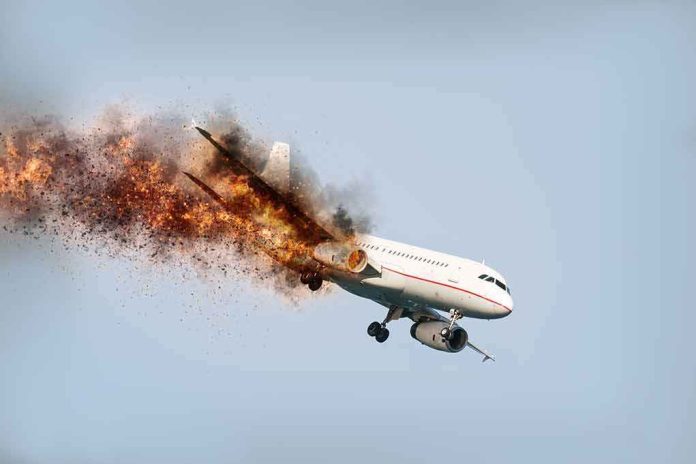
Flames and smoke seen near an American Airlines engine after takeoff from Myrtle Beach ended with a safe landing, not a crash, and the plane was pulled from service for inspection.
Quick Take
- American Airlines said the aircraft landed safely and was taken out of service for maintenance inspection.
- Myrtle Beach International Airport said no one was hurt and passengers left the plane normally at the gate.
- Air traffic control reports and nearby pilot observations pointed to bird remains on the runway and smoke from the left engine.
- The Federal Aviation Administration said it will investigate the incident.
What Happened Over Myrtle Beach
An American Airlines flight bound for Charlotte returned to Myrtle Beach shortly after takeoff Monday after the crew reported a bird strike and engine trouble. American Airlines said the aircraft landed safely and was taken out of service for inspection. Airport officials said no injuries were reported, and the plane taxied to the gate under its own power, where passengers deplaned normally.
ABC News reported that a “significant amount” of bird remains and feathers were found during runway inspection after the departure. The same report said another nearby pilot told air traffic control that he saw smoke coming from the plane’s left engine after it hit a flock of birds. That detail helps explain why the event drew so much attention online, even though the plane did not break apart or crash.
What Officials Said So Far
The public record now points to a routine but serious aviation hazard: a bird strike during departure. The strongest statements focus on safety, not damage detail. American Airlines said there was no fire or fluid leak after landing, but it has not publicly described the exact parts affected. The airline also said it was working to get the 172 passengers to Charlotte as soon as possible.
The Federal Aviation Administration said it will investigate, which is standard after a reportable incident involving a commercial flight. WBTW reported that the crew first raised the issue about 8:15 a.m., while FlightAware data showed the plane left Myrtle Beach at 8:00 a.m. and landed back at 8:36 a.m. That narrow time window shows how fast the situation unfolded from takeoff to return.
Why the Clip Spread So Fast
Short video clips can make any engine event look worse than the final outcome. In this case, the headline image was flames or sparks near a Boeing 737 engine, but the verified ending was a safe return and no injuries. That gap between dramatic footage and a safe landing is one reason these stories spread fast on social media, where the first image often shapes the whole public reaction.
🚨 American Airlines Flight 1760 bird strike: A Boeing 737 returned safely to Myrtle Beach after passengers saw flames from the engine area. What happened to Flight 1760?https://t.co/pYHaggEKfh#AmericanAirlines #Flight1760 #BirdStrike #AviationNews #BreakingNews
— Chetan Budholiya (@ChetanBudholiy2) August 11, 2026
The deeper issue is not just one bird strike. It is the way common aviation hazards become viral before technical facts arrive. Bird strikes happen often in commercial flying, and airlines usually respond with a precautionary return and an inspection. This case fits that pattern, but the public still does not have a full engineering report on what, if anything, was damaged inside the engine.
Sources:
facebook.com, abcnews.com, cnn.com, theguardian.com, youtube.com, nypost.com, cbsnews.com, en.wikipedia.org, people.com, wbtw.com, instagram.com, 6abc.com, wbtv.com, aol.com, deeparrival.com, aviationa2z.com, x.com