

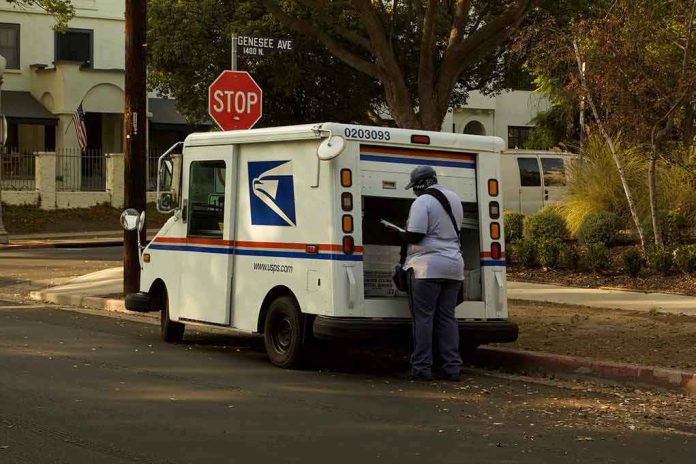
A Florida mail carrier is accused of turning her mail route into a pipeline for dozens of cats and dogs she could not properly care for, in what the local sheriff calls the worst animal hoarding case his county has ever seen.
Story Snapshot
- Deputies say a 77-year-old mail carrier collected cats along her route and kept more than 90 animals in filthy cages at her home.
- Authorities describe waste up to a foot deep, no air conditioning, and many animals underweight or sick, prompting misdemeanor cruelty charges.
- Investigators and shelters are now scanning microchips and have already matched some animals to owners searching for missing pets.
- The sheriff says she likely believed she was “rescuing” feral cats, highlighting how broken systems can let a crisis grow unchecked for years.
How Deputies Discovered a House Full of Caged Animals
Martin County deputies say the case began with reports that a longtime United States Postal Service mail carrier, 77-year-old Gail Giustino, was taking animals into her Stuart, Florida home from neighborhoods on her delivery route. Animal control officers tried for about a week to get inside but say Giustino refused to let them in. Deputies then obtained a search warrant and went to the house on Southwest Meadowlark Circle, where the smell was so strong they say they could detect it from the street.
Deputies report that when they opened the door, they found floors covered in animal waste, in some places several inches deep, and described it as reaching “up to a foot” in spots. The home had no working air conditioning or ventilation, according to the sheriff, even though dozens of animals were inside. Officials estimate that 80 to 83 cats and between 12 and 17 dogs were confined in cages throughout the house, with some animals reportedly trying to flee when officers entered.
What Investigators Say About the Mail Route and Missing Pets
Sheriff John Budensiek says investigators believe Giustino had been collecting many of the cats while working as a mail carrier, a job she has held since the late 1990s. He told reporters the case started after tips that a postal worker was “stealing or collecting cats along her route.” Later, he stressed that she “didn’t steal somebody’s pet” but was likely collecting feral cats, showing how even officials are trying to separate strays from owned pets in this story.
The Humane Society of the Treasure Coast, which is now caring for the seized animals, reports that microchip scans have already linked several cats and dogs to owners who had filed missing-pet reports. Local news coverage describes people visiting the shelter hoping to find pets that vanished months or even years ago. Deputies say the ownership investigation is still open and encourage anyone missing a cat or dog from the area to file a report, underscoring that those animals may have come from regular neighborhoods, not only feral colonies.
Animal Cruelty Charges, Hoarding History, and a Broken System
Giustino has been charged with misdemeanor animal cruelty and with confining animals without enough food, water, or exercise, based on the conditions deputies and animal welfare workers say they saw inside the house. Many of the cats and dogs were underweight or had skin problems, hair loss, dental disease, and other health issues when they arrived at the Humane Society, according to shelter staff. A hazardous-materials team had to ventilate the home before crews could safely continue removing animals, showing how far the situation had spiraled.
A Florida mail carrier is accused of secretly collecting pets from her delivery route—and deputies say they uncovered more than 100 cats and dogs living in horrific conditions.
It's the "worst animal hoarding case" the sheriff has ever seen. Investigators say animals were found… pic.twitter.com/GIDkFQfoiu
— Fox News (@FoxNews) August 1, 2026
The sheriff says this is “clearly a hoarding situation” and calls it the most severe animal hoarding case he has seen in Martin County. Records show Giustino had already received dozens of civil citations for animal care issues as far back as a decade ago, but that earlier case was dismissed in court. Officials now say they believe she thought she was helping the animals yet went “about it the wrong way,” which matches a broader pattern where people who see themselves as rescuers end up overwhelmed, and government warnings drag on for years without real solutions.
Why This Case Hits a Nerve About Trust and Accountability
Many Americans already feel the system is failing them, and this case adds fuel to that fire. Here, a federal worker—someone families see on their doorstep every day—allegedly turned her daily route into an informal animal collection program, while local agencies struggled for years to stop it. Neighbors now learn that missing pets may have lived in cages with no fresh air, stacked in a house that authorities had cited again and again without fixing the problem.
For conservatives and liberals alike, the story taps into a shared worry: that warnings are ignored until a crisis explodes. Animal lovers see a government that allowed unhealthy conditions to grow despite dozens of prior citations. Ordinary homeowners see a trusted public employee accused of quietly removing animals from their streets. Whether people focus on animal welfare, mental health, or simple neighborhood safety, this Florida case raises the same hard question many ask about the “deep state” today—how many other problems are known, documented, and still left to rot behind closed doors.
Sources:
facebook.com, foxnews.com, newsnationnow.com, bizpacreview.com, katv.com, wfla.com