

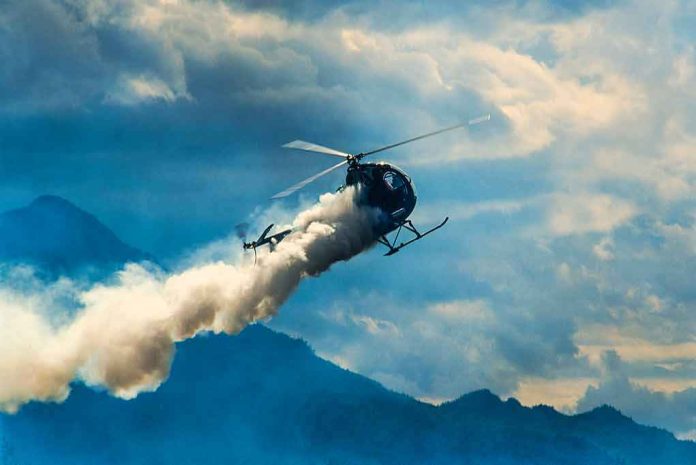
A sightseeing gyroplane in China lost control and crash-landed onto two tourists, highlighting how thin the safety margin can be when flight shows mix with crowded scenic spots.
Story Snapshot
- Local officials confirmed a gyroplane crashed at a Qinghai tourist site, injuring two people on the ground.
- Videos show a low-altitude demo flight turning unstable before the aircraft dropped near Chaka Salt Lake.
- Early reports point to loss of control; the site closed and the aircraft is sealed for investigation.
- The case underscores a broader pattern: dramatic tourist-flight crashes draw fast claims before facts are set.
What Officials Confirmed About the Crash
Ulan County’s joint investigation group said a gyroplane fell at the Chaka Sky No. 1 Scenic Area at 12:08 p.m. on July 21. Two people on the ground were hurt and sent to the hospital, and both had stable vital signs. The aircraft was sealed for review, and the scenic area closed during the probe. Officials said the cause remains under investigation, which is common in the first days after an air incident.
Multiple reports describe a low-altitude demonstration that went wrong. Video shows a yellow rotorcraft turning unstable and coming down close to a salt lake bank. Coverage from several outlets used the term “helicopter,” but also identified the craft as a gyroplane, a small rotorcraft type used in sightseeing. That mix often happens early, since headlines race ahead of technical labels when video goes viral.
How the Event Unfolded at the Scenic Area
Witness clips and reports indicate at least three small sightseeing aircraft were flying when one appeared to spin and drop. The airframe did not show catastrophic breakup on impact, and pilots were described as unhurt. Two tourists on the ground were struck and treated for head injuries, with no immediate threat to life reported. First responders moved quickly, and local authorities paused operations at the site while they secured evidence.
Descriptions from international and local media align on key points: low altitude, instability or loss of control, and injuries to people on the ground. Early talk in some reports linked the event to a demonstration run for visitors along the lakeshore. That pattern fits the setting, since tourist zones often allow short scenic flights to draw crowds, which increases risk when something goes wrong close to people.
Why Early Causes Are Unclear and What To Watch
Investigators often need days or weeks to test parts, check flight plans, and review pilot statements. In many tourist-flight accidents worldwide, first stories point to pilot error, wind, wake from other aircraft, or a mechanical fault. Later findings sometimes change that picture after data review. This case is following that playbook so far: a quick official notice, viral video, and a closed site while the technical work begins.
The rare nature of such accidents does not lessen their impact. Crashes at scenic sites get heavy attention because they are on video and involve bystanders. Prior incidents from Nepal to Japan show how fast a simple tour can turn deadly when altitude is low and options are few. Those cases also show why strict buffers between aircraft and crowds matter, even for short flights that seem routine to operators.
Safety, Accountability, and Public Trust
Local officials took visible steps: sealing the craft, forming a joint probe team, and halting flights. The key test now is transparency. Clear answers on training, maintenance, wind conditions, and spacing between aircraft can rebuild trust. Vague updates, on the other hand, fuel doubt across the spectrum, from people who fear lax oversight to those who see rules on paper but weak enforcement on the ground.
People across politics share a basic ask after events like this: keep families safe in public places. That means setting hard limits for demo flights near crowds, posting real-time wind rules, and making pilots pause when other aircraft are nearby. It also means publishing findings, not burying them. When agencies show their work, the public can judge if leaders are doing the job, not just issuing statements after the fact.
Sources:
thegatewaypundit.com, aztecabajio.com, news.nextapple.com, viralpress.com