

The judge threw out the first backpack search but kept the gun, suppressor, ammo, and notebook via a later inventory search—forcing a brutal lesson in how procedure, not headlines, decides criminal cases. [1][4]
Story Snapshot
- Initial McDonald’s search suppressed; station-house inventory search deemed valid. [1][4]
- Pre-custody statements stay in; some custodial answers before Miranda are out. [1][2][4]
- Prosecutors say the admitted items link Mangione to Brian Thompson’s killing. [1][4]
- Media narratives risk burying the nuance of what was actually admitted. [1][4]
The Ruling That Split the Difference—and Reshaped the Case
The court drew a hard line: the Altoona McDonald’s backpack search did not pass constitutional muster, so its fruits are suppressed; a subsequent inventory search at the police station did, so its fruits survive. Reporters summarizing the ruling described the station search as valid and the defense’s bid to exclude it as rejected. This means jurors may still hear about a gun, a suppressor, ammunition, and a notebook prosecutors call central to their theory tying Mangione to Brian Thompson’s Manhattan shooting. [1][4]
The custody timeline became the hinge for statements. The judge, according to coverage, fixed custody around 9:47 a.m., with Miranda warnings shortly after. Statements made before that time remain admissible. Spontaneous comments and basic pedigree or safety responses after warnings also survive, while some answers given during improper custodial questioning shortly before the warnings are suppressed. That is a surgical outcome: it narrows, but does not gut, the government’s narrative of what Mangione said and when. [2][4]
What Survived: The Prosecution’s Coherent Through-Line
Prosecutors argue the admitted backpack contents—gun, suppressor, ammunition, and notebook—are the spine of their case. They assert these items connect Mangione to Thompson’s shooting five days earlier, and that the station inventory search followed lawful procedure apart from the flawed on-scene rummage. The judge’s acceptance of the inventory search indicates the court found an administrative basis to catalog property in custody, which, if documented properly, often withstands suppression attacks. That keeps the state’s theory structurally intact. [1][4]
Conservative instincts about rule of law favor this split: police do not get a free pass for a bad first search, yet society’s interest in order allows evidence to come in when officers follow established station-house inventory protocols. The message is consistent: protect constitutional boundaries, but do not reward chaos by excluding evidence that was later secured under a routine, non-investigatory procedure. That balance aligns with common-sense public safety and the Constitution’s guardrails when courts police timing, scope, and purpose. [1][4]
What Fell Away: The Defense Wins That Still Matter
The defense secured real limits. The initial restaurant search was ruled improper. Some statements made during custodial questioning prior to Miranda are out. The court’s adoption of a defined custody time shows it credited parts of the defense’s timeline, giving teeth to Fifth Amendment protections. Those slices matter for appellate posture and trial strategy because they trim narrative momentum and force prosecutors to anchor their story in what survived rather than in everything officers gathered that morning. [1][2][4]
Judge Rules Partly In Favor Of Luigi Mangione At Key Pretrial Hearinghttps://t.co/V1zL5iYx9Q
— JCN (@CharlieMMAFAN) May 18, 2026
The available record is still secondhand. Reported summaries describe the ruling’s contours but not the full written order, exhibits, or a transcript of officer testimony that would cement the inventory rationale and the exact custody findings. Until those land, argument over fine details—who handled the bag, when inventory began, and which questions were pedigree versus interrogation—remains live. Precision here decides appeals and, more immediately, the shape of opening statements. That is the unglamorous engine room of any high-profile prosecution. [2][4]
How Media Frames Can Mislead—and What Actually Matters
Broadcast packages tend to headline “suppressed evidence” or “key items admitted,” depending on editorial taste. That polarity obscures the real takeaway: the gun, suppressor, ammunition, and notebook appear headed for trial under a station-house inventory theory, while some words are out and others remain in. That outcome is not a technicality; it is normal constitutional sorting. The public should resist narratives that treat suppression as absolution or admission as inevitability. The law demands sequence, purpose, and paperwork. [1][4]
What To Watch Next: Documents, Chain of Custody, and Forensics
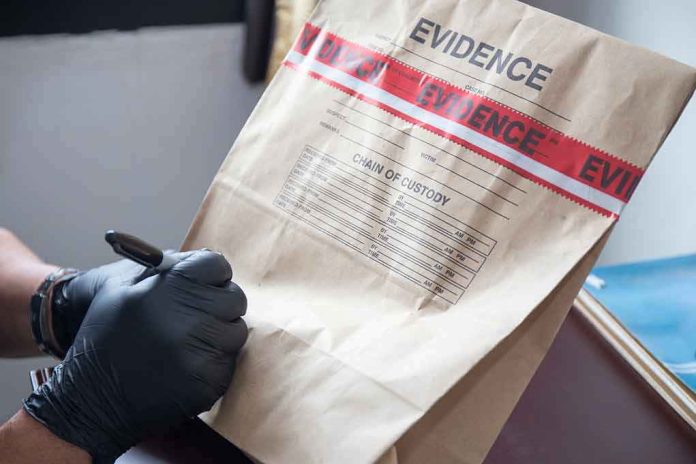
The written order and transcript will answer whether the inventory search complied with policy, whether body-camera or radio logs confirm the custody timeline, and how chain-of-custody records track the bag, gun, suppressor, ammunition, and notebook from street to station to lab. Ballistic and trace reports will decide whether those items merely show possession or link directly to Thompson’s killing. Those documents, not viral clips, will determine whether the surviving evidence carries persuasive, trial-grade weight. [1][2][4]
Sources:
[1] YouTube – Luigi Mangione pretrial hearing: Defense seeks to suppress evidence
[2] Web – A Look Inside Luigi Mangione’s Pre-trial Suppression Hearings
[4] YouTube – Luigi Mangione returns to court for pretrial hearing