

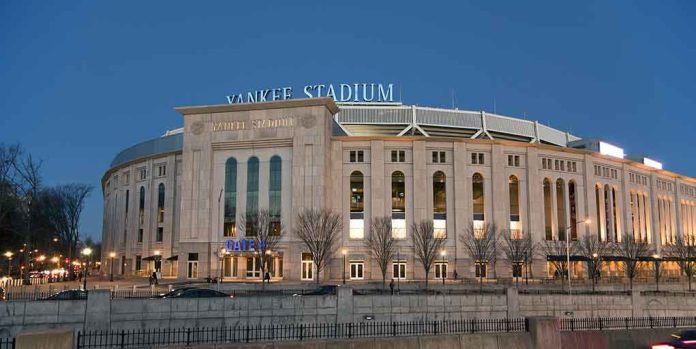
On Sunday, September 13, New York City health officials named the cooling tower at Yankee Stadium among ten South Bronx rooftops that tested positive for Legionella — the bacteria behind Legionnaires’ disease — and ordered every one of them cleaned and disinfected on a deadline. The cluster that sent investigators to those rooftops was declared three days earlier, on September 10, and has already been tied to one death.
Story Highlights
- September 13: Yankee Stadium’s cooling tower is one of 10 in the South Bronx confirmed positive for Legionella; the city ordered immediate cleaning of all 10.
- September 10: the Health Department declared a Legionnaires’ cluster in Melrose and Morrisania (ZIP codes 10451 and 10456) — multiple cases and one death reported in early updates.
- At least 24 towers had been sampled by the weekend; testing is expanding across nearby rooftops.
- The Bronx has been here before: the 2015 outbreak sickened 138 people and traced to a single cooling tower.
Yankee Stadium Lands On The City’s List
By Sunday, officials said 10 cooling towers in the investigation zone tested positive for Legionella by polymerase chain reaction, including the tower at the Yankee Stadium address. The Health Department ordered all 10 systems cleaned and disinfected under city rules, which require prompt remediation after a positive test. News reports said at least 24 towers had been tested by that point, as investigators expanded the net to find and fix any contaminated systems nearby.
The stadium’s name is what turned a neighborhood health notice into a citywide story. The bacteria spreads through fine water mist from towers like these, not person to person — which is why the city’s rules focus on the rooftops and why the list of addresses matters more than the case count. Yankee Stadium sits inside the same two ZIP codes where the cluster’s patients live.
A cooling tower at the Yankee Stadium address is among 10 towers that tested PCR-positive for Legionella bacteria on Sunday as officials investigate an outbreak in the South Bronx. https://t.co/K6HPu3oVB1
— JC AQUINO (@juanaquino20982) September 13, 2026
How The Cluster Was Found
The Health Department announced a likely community cluster of Legionnaires’ disease on September 10 in parts of Melrose and Morrisania, targeting ZIP codes 10451 and 10456. Officials confirmed several diagnosed cases and reported one death in early briefings as the response began. The department started outreach to doctors and hospitals and began mapping patient movements and nearby cooling towers to narrow likely exposure points and speed up testing.
Investigators inspected dozens of cooling towers near where patients lived or spent time, collected water samples and ran rapid tests to screen for Legionella. The city emphasized that quick action can cut risk. People with cough, fever, or shortness of breath in the zone were told to seek care right away, especially seniors and those with lung disease.
City guidance requires regular culture testing by certified labs and steady maintenance during the cooling season. Owners must keep treatment logs, meet sampling schedules, and respond fast to positive results. Those rules exist because cooling towers, which recirculate warm water, can grow Legionella if biocides lapse or systems fall out of balance. Clean, well-run towers sharply reduce the risk of airborne spread into streets and homes below.
Pattern Of Outbreaks Shows Towers Are A Repeating Weak Link
Public records show New York City has faced several community outbreaks since 2006, with cooling towers repeatedly implicated after lab matching and field work. The 2015 South Bronx outbreak sickened 138 people and was traced to a single cooling tower through whole-genome sequencing and epidemiology, a key lesson for today’s response. That history explains the city’s wide initial testing and rapid cleaning orders while full culture and genomic results continue coming in.
Health officials recently closed an unrelated Upper East Side cluster after the exposure window passed and the source was addressed. Together, these events show that oversight and maintenance, not new bureaucracy, protect neighborhoods best. Clear rules, fast testing, and swift cleanups save lives. Building owners who stay on schedule with treatment and records help keep their communities safe. Residents should stay alert for symptoms, but daily life can continue as systems are remediated.
What South Bronx Residents Should Do Right Now
Doctors can test and treat Legionnaires’ disease with antibiotics, and early care matters. Anyone in the affected ZIP codes who has flu-like symptoms, chest pain, or trouble breathing should contact a doctor and mention the South Bronx cluster. People over 50, smokers, and those with weak immune systems face higher risk. Home air conditioners do not use cooling towers and are not a known source. The city will update tower status and case counts as confirmed lab results arrive.
Sources:
nypost.com, healthbeat.org, brooklyn.news12.com, pritzkerlaw.com, nyc.gov, nytimes.com, evidence.nejm.org