

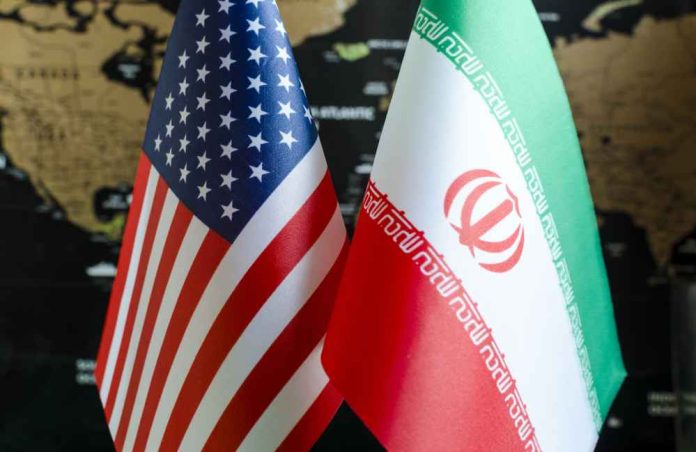
A new Trump-brokered understanding with Iran promises “no nuclear weapon ever” — but the hard facts show time limits, not magic guarantees.
Story Snapshot
- Trump says his Iran deal means Tehran will “never” get a nuclear weapon, echoing his long-standing red line.
- The 2015 Obama-era nuclear deal already aimed to block Iran’s path to a bomb through strict limits and inspections.
- Experts say that deal delayed and constrained Iran’s program but never guaranteed permanent prevention.
- The old deal expired in 2025, and Iran then walked away from its terms and grew its nuclear capabilities.
Trump’s Bold Claim: “Iran Will Never Have a Nuclear Weapon”
President Donald Trump has again told Americans that any deal with Iran must guarantee that the regime “will never have a nuclear weapon,” and he now claims that the new understanding meets that test.[2] This language lines up with what he has said for years, including that 90 to almost 100 percent of any deal he wants is about stopping nuclear weapons. For many conservatives, that sounds like common sense: no cash for Tehran, no sanctions relief, unless the bomb threat is off the table.
Trump’s first term record shows he saw the 2015 Joint Comprehensive Plan of Action, or JCPOA, as a fatally weak agreement.[2][1] His White House said that deal “at best” delayed Iran’s nuclear ambitions and promised instead to ensure Iran had “no possible path to a nuclear weapon.”[2] That is the standard he is now holding up again. The question for readers is simple but serious: does any paper deal, past or present, really make “never” true, or does it only buy time?
What the Obama Nuclear Deal Actually Did — and Did Not — Do
The 2015 JCPOA was sold to the public as a way to stop Iran from sprinting to a bomb by capping enrichment, shrinking uranium stockpiles, and opening sites to United Nations inspectors.[1][6] Fact-checkers and experts agree the goal was to block Iran’s pathway to a nuclear weapon while it followed the deal, not to bless a bomb.[1] International monitors said Iran complied for several years, which means its nuclear work was more tightly watched during that time than before.[3][5]
But the deal came with “sunset clauses” — key limits were always designed to expire after about 10 or 15 years.[3][5] The Council on Foreign Relations explains that the agreement put “significant restrictions” on Iran’s nuclear program in exchange for sanctions relief, including bans on the highly enriched uranium and plutonium needed for weapons.[6] Those are real restraints, but they are time-bound, not forever locks. The International Campaign to Abolish Nuclear Weapons notes the deal imposed “lots of time-bound limits” on centrifuges, stockpiles, and reactors.[5] Some inspection rights were permanent, but the toughest caps were not.[5]
After U.S. Withdrawal and Expiration, Iran’s Program Advanced Again
In 2018, Trump followed through on his promise and pulled the United States out of the JCPOA, calling it “defective at its core.”[2][7] He argued that if America did nothing, Iran would soon be “on the cusp” of acquiring the world’s most dangerous weapons.[1] After the exit and the return of sanctions, Iran started breaking the deal’s limits. The Council on Foreign Relations reports that Iran exceeded stockpile caps, enriched to higher levels, developed new centrifuges, and restarted work at sensitive sites after 2019.[6]
Then, in October 2025, the deal formally expired and Iran announced it would no longer be bound by its terms.[5] That single fact undercuts any claim that the 2015 agreement itself could ever guarantee “never.” A contract that ends cannot promise safety forever. Today, United States and international experts still assess that Iran is not currently building an actual weapon, but they warn that its steps toward the capacity to do so are worrying, especially with weaker inspections.[5][6] In other words, the old deal slowed Iran down while it lasted, then politics and time pushed the guardrails aside.
How Trump’s New Promise Fits the Pattern of “Forever” Talk
Trump is not the first leader to use sweeping words about nuclear threats. Fact-checkers note a broader pattern: politicians talk about “hard prevention” or “never” even when the real tools are time-limited inspections and delay.[1][4] The JCPOA is a good example. Supporters said it sharply cut breakout risk for a period. Critics said it only kicked the can down the road.[3][6] Yet both sides often slid into slogans instead of spelling out what happens when the sunsets hit or when one side walks away.
Reports on today’s talks show the same tug-of-war. Trump insists he will only sign a deal that “gets everything we want,” including preventing Iran from getting a nuclear weapon and forcing it to give up highly enriched uranium and key nuclear sites.[2] But detailed coverage says some current talks still leave the exact nuclear steps for later rounds and focus now on issues like the Strait of Hormuz and sanctions relief.[2][3] That gap between big promises and fine print is where American security — and our trust — are on the line.
Sources:
[1] YouTube – “Most importantly, we have a deal that Iran will never have a nuclear …
[2] Web – Fact-checking Trump’s comments that a 2015 deal gave Iran … – PBS
[3] Web – President Donald J. Trump is Ending United States Participation in …
[4] Web – Trump and the Iran Nuclear Deal: The United States Is Out
[5] Web – United States withdrawal from the Iran nuclear deal – Wikipedia
[6] YouTube – Trump Says US Could Get Iran’s Oil as Nuclear Deal Talks Continue
[7] Web – What Is the Iran Nuclear Deal? | Council on Foreign Relations