

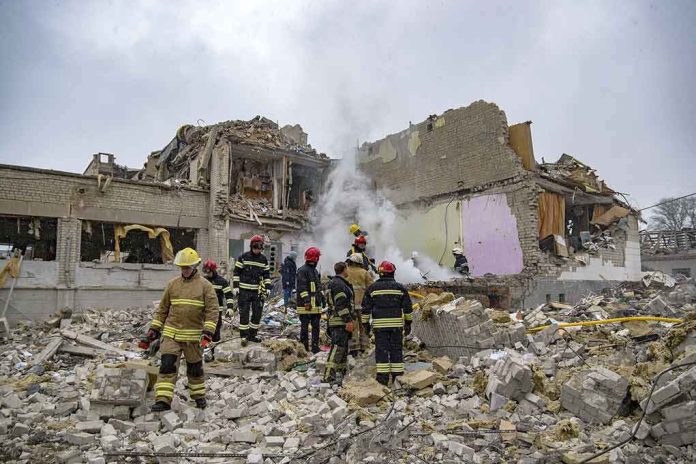
Four American tourists died when a suspected gas-linked blast flattened a historic Athens building steps from the Acropolis, exposing how aging city infrastructure can turn a quiet street into a disaster zone.
Story Snapshot
- Six people died after an explosion collapsed a two-story building in Athens’ Plaka district.
- The mayor and investigators pointed to a likely link with gas infrastructure and a suspected leak.
- Police and residents reported a gas smell in the area before the blast.
- The cause is under investigation by the fire brigade’s crime unit.
Confirmed Casualties and Location Near the Acropolis
Greek authorities and major outlets reported six dead after the collapse, including four Americans. Reporters identified the site as an old two-story building in Plaka, the historic district at the foot of the Acropolis. Rescue teams worked around heavy debris and narrow streets common in that neighborhood. The building’s age and dense setting added to the danger for responders and bystanders. United States officials confirmed the American deaths, which drew quick international attention.
Athens Mayor Haris Doukas said the explosion was likely linked to gas infrastructure. Investigators at the scene said they believed a gas leak caused the blast. Police and fire officials noted a gas smell in the area, which includes hotels and short-term rentals. Greek police said residents had filed a report about a gas leak, which aligned with what responders encountered on site after the collapse. These public statements set the early direction of the probe.
Early Evidence Pointing to a Gas Leak
Reporters on the ground described a powerful explosion that leveled the structure and scattered rubble across nearby streets. The pattern fits how trapped natural gas can build up in a closed space and ignite from a small spark. Past cases show that leaks can stem from loose pipe connections, old materials, or poor leak management, and can explode without a visible flame beforehand. These base-rate patterns explain why authorities focused on gas so quickly after first reports.
The fire brigade’s crime investigation unit took charge of the cause analysis. That step signaled a formal technical review rather than a quick call. Such teams document burn marks, pressure effects, and fracture lines to trace where gas pooled and how it ignited. They also check utility records and recent work at the address. Officials said the cause remained under investigation, which is standard in complex blasts where multiple factors could interact inside older buildings.
Why Investigations Take Time in Urban Gas Blasts
National investigators in other cases have needed weeks or months to confirm a leak’s source. They often find failures only after lab tests, line pressure data, and forensic reconstruction. Some probes end with “undetermined” because they cannot prove the exact leak point or ignition source with required certainty. That does not erase the gas-leak pattern; it reflects strict evidence rules. Athens investigators now face that same process in a tourist area with heavy media focus.
Four American tourists among 6 killed yesterday after a suspected gas explosion leveled a building in Athens’ Plaka district, at the foot of the Acropolis.
Two couples were staying in a short term rental and due to fly home Friday.
Prayers for the families.
Such a tragedy and… pic.twitter.com/Gxe0Ww3e62— Gina Beana Fofina (@Ginasassyass) September 27, 2026
This tragedy speaks to a broader worry that spans right and left: basic public safety systems feel brittle. Tourists and local families trusted that pipes under old streets were sound. When officials miss warnings or wait on repairs, the cost lands on ordinary people. That fear is not about politics; it is about daylight between promises and performance. Clear findings, public records on any prior leak reports, and a plan to fix weak points would help rebuild trust.
Sources:
facebook.com, reuters.com, abcnews.com, fidelity.com, abc.net.au, euronews.com, yahoo.com, ntsb.gov, tovima.com