

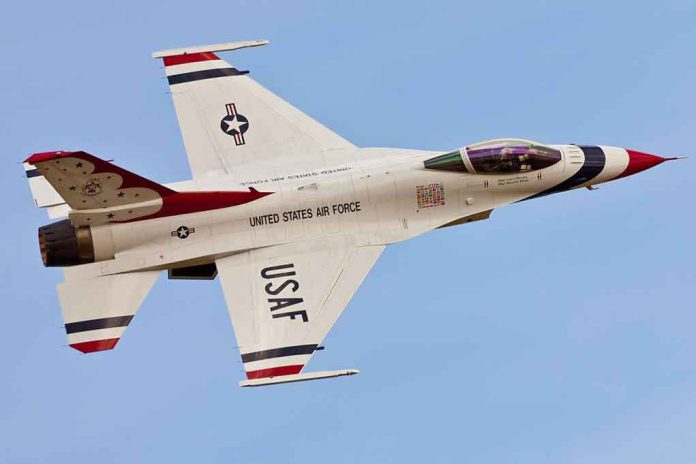
An Air Force investigation found an F-16 Thunderbird crashed because hidden engine parts failed deep inside a known inspection blind spot.
Story Highlights
- Investigators traced the crash to misaligned vanes and broken compressor blades inside the F-16 engine core.
- The failure happened in an area maintainers cannot fully inspect during routine service.
- The board cleared the pilot and maintenance crew of blame based on the evidence.
- Similar F-16 findings cite blind-spot limits in compressor-stage inspections.
Official Finding: Internal Engine Failure Ended Flight
Air Force investigators concluded the Thunderbird F-16 lost thrust after two compressor blades snapped due to high-cycle fatigue. The report said three variable vanes in the fourth and fifth compressor stages were misaligned, which stressed nearby blades until they broke in flight. The break triggered major engine damage and a rapid loss of power. The board called this the cause of the crash and said sustained flight was no longer possible after the failure.
🔴 F-16 Thunderbird engine blind spot caused $33M jet crash; same flaw downed second fighter in 2024
An Air Force Investigation Board cleared all personnel in a December Thunderbird F-16CM crash but identified the cause: three misaligned variable vanes in stages 4–5 of the Pratt… pic.twitter.com/HkPZ9uEVpb
— NewsTongue (@NewsTongueX) September 22, 2026
The report described where the problem began: deep inside the engine’s core. Investigators said those compressor stages sit beyond the reach of routine checks. Maintainers do not open that section for standard inspections. The board found no available procedures that would have allowed crews to spot the turning or misalignment of those vanes before the mishap. That placed the defect in a true blind spot for day-to-day maintenance.
Accountability: Pilot And Crew Cleared Of Blame
The Aircraft Investigation Board cleared the pilot, the maintainers, and the Thunderbird leadership team. The board said they followed procedure and made sound calls based on the information they had. The cause sat inside the engine where no normal inspection would look. That finding matters. It points to a system issue in the machine, not an error by the people who flew or fixed it.
The Air Force has seen this pattern before. Past F-16 cases have tied crashes to compressor problems that live behind panels teams rarely open. Investigators in another F-16 loss cited a single misaligned variable stator vane that set off a similar chain toward blade fatigue and failure. That report also emphasized limits on what routine shop checks can actually see inside those core stages.
Why This Matters For Readiness And Safety
Thunderbirds fly tight shows over American crowds. The team is a symbol of skill, pride, and recruiting strength. When a jet goes down due to a hidden engine flaw, the fix cannot be scolding pilots or adding briefings. The fix must target the machine and the maintenance plan. That means better access, smarter inspections, and clear rules on when to pull engines for deeper checks of these hard-to-reach stages.
🔴 F-16 Thunderbird engine blind spot caused $33M jet crash; same flaw downed second fighter in 2024
An Air Force Investigation Board cleared all personnel in a December Thunderbird F-16CM crash but identified the cause: three misaligned variable vanes in stages 4–5 of the Pratt… pic.twitter.com/HkPZ9uEVpb
— NewsTongue (@NewsTongueX) September 22, 2026
Defense leaders should press engine makers and depots to close this blind spot. Easier access ports, borescope routes, or updated overhaul intervals could help. Data tools may also flag early warning signs in vibration or temperature trends. Conservative principles back this approach: solve the root problem, waste no money on theater, and protect the people who carry the mission. Lethal jets must be safe to fly, and taxpayers deserve fixes that work the first time.
What Comes Next: Practical Steps To Reduce Risk
Commanders can order targeted fleet checks where feasible. Engineers can study vane alignment risks, torque settings, and wear patterns in the fourth to sixth stages. Depots can review teardown photos and lab reports to confirm the fatigue path. If inspection access is the barrier, leaders can adjust overhaul timelines or add a special check after stress-heavy flight cycles. Each step should focus on finding misaligned vanes before they start chewing up blades.
This case also shows why clear, public results matter. The board released a traceable chain of cause and effect. The conclusion rests on material facts, not guesses. The finding supports the people who did their jobs and points to a focused engineering fix. That is how a strong military protects crews, honors the public trust, and keeps America’s air power ready on short notice. The mission demands nothing less.
Sources:
taskandpurpose.com, airandspaceforces.com