

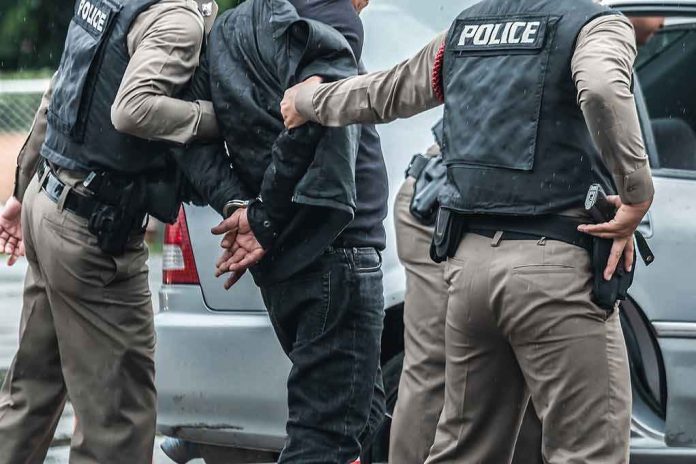
As police made 22 arrests around a raucous Dearborn council meeting, a local pastor claimed the city is “under Sharia law,” while officials insisted constitutional law still rules the day.
Story Snapshot
- A pastor told Dearborn’s council the city is “no longer under American laws,” demanding members denounce Sharia law.
- Officials and community leaders denied the charge, saying Dearborn is governed by the United States and Michigan Constitutions and city charter.
- Police reported 22 arrests tied to protests around the meeting, showing how heated the dispute has become.
- No public record shows any ordinance or ruling that replaced civil law with religious law in Dearborn.
What Sparked The Clash In Dearborn
On August 18, a Dearborn City Council meeting turned into a national flashpoint after Pastor Lorenzo Sewell said, “We have lost this city,” and claimed Dearborn now operates under Sharia law. He repeatedly pressed council members to denounce Sharia law from the dais, setting off loud reactions inside and protests outside. The scene drew heavy police presence and barricades. The moment traveled fast online, feeding a wider fight over faith, free speech, and how city rules are enforced.
Dearborn’s leaders rejected the pastor’s claim. For years—through different mayors—the city has said the law here is the United States Constitution, the Constitution of the State of Michigan, and the City of Dearborn Charter. During this week’s flare-up, coverage quoted officials again stressing that point and pledging to protect the rights of all residents, whatever their faith. That stance lines up with past denials when similar rumors surfaced in Dearborn and across Michigan.
Protests, Arrests, And The Line Between Faith And Law
Police reported 22 arrests around the demonstration linked to the meeting, underscoring how tense the environment has become. Reports describe crowds and counter-protesters pressing toward the chamber doors, which forced officers to enforce crowd controls. Some speakers framed their concerns as unequal treatment and religious favoritism. Others defended Dearborn’s diverse community and warned against fear-based claims. The overlapping rallies made it easy to mix policy disputes with broader anger at “elites” and institutions.
The pastor’s claim landed because it speaks to a larger frustration: people see rules enforced one way for some and another way for others. His charge focused less on a specific law and more on how officials apply existing rules. But records and reporting show no ordinance, council vote, or court order that installs Sharia law in Dearborn. That gap matters. Feeling ignored or disrespected is real, yet it is different from proving a change in legal authority.
What The Record Shows—And What It Does Not
Coverage and video capture what was said at the mic. They do not show a legal document replacing civil law with religious law. Reporters note that city officials, past and present, flatly deny any such shift, and emphasize constitutional limits that bar any religious code from replacing public law. A Michigan outlet covering the protests wrote there is no proof that Sharia law has supplanted state or federal law in Dearborn. Those are testable claims grounded in public records, not just rhetoric.
At the same time, this fight fits a longer national pattern. After the attacks of September 11, claims that American cities are “under Sharia” have surfaced often, especially where Muslim communities are visible. Fact checks over the years found no evidence of courts or councils swapping out civil law for religious law, while noting that people of many faiths may follow religious traditions in private life and voluntary contracts under the same civil rules as anyone else.
Why This Matters Beyond Dearborn
Millions across the political spectrum think government has stopped playing fair. They see insiders protect their own while regular people get lectured, fined, or ignored. Dearborn became a screen for those fears. The pastor gave voice to one side’s worry that leaders bend rules for favored groups. Officials, backed by public records, point to constitutional guardrails. Both sides cite fairness. Only one side claims a change in the actual law—and that requires proof that does not appear in the record.
CURRENT: Pastor Lorenzo Sewell made the Sharia law accusation during a heated Dearborn City Council meeting on August 18, amid protests organized around concerns about Muslim influence in the city. Dearborn officials have rejected the characterization that Muslims receive special…
— DFS (@mabezekdfs) August 21, 2026
What would reduce distrust? First, release full meeting video and transcripts. Second, publish clear data on how noise, zoning, and permitting rules are enforced across faiths and events. Third, invite an independent review of any claims of uneven enforcement. These steps will not end the culture war. But they can test claims against facts, case by case, so people can see whether the system treats them equally. Sunlight is the way back from rumor to reality.
Sources:
krcrtv.com, economictimes.indiatimes.com, politico.com, theatlantic.com, splcenter.org, timesofindia.indiatimes.com, nypost.com