

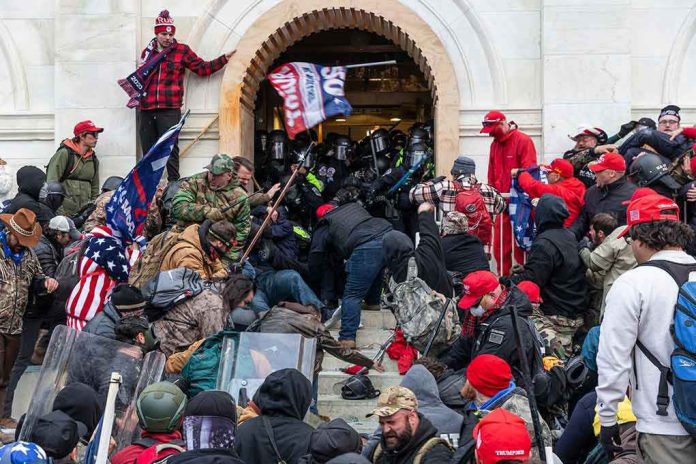
Pardoned January 6 defendants are now wielding unprecedented influence within the Justice Department, actively lobbying officials to prosecute the very federal attorneys who once secured their convictions.
Story Snapshot
- Trump’s mass pardons have given January 6 defendants direct access to Justice Department officials
- Pardoned individuals are pushing for criminal prosecutions against federal prosecutors who convicted them
- This represents a dramatic reversal where defendants now influence prosecutorial decisions
- The campaign raises questions about potential weaponization of the justice system
Pardoned Defendants Gain DOJ Access
Following President Trump’s sweeping pardons of January 6 Capitol defendants, many of these individuals have secured remarkable access to Justice Department leadership. These formerly convicted rioters are now conducting regular meetings with DOJ officials, leveraging their pardoned status to influence prosecutorial decisions. The unprecedented nature of this access represents a complete transformation of their legal standing within the federal justice system.
Campaign to Target Former Prosecutors
The pardoned defendants have organized a coordinated effort to seek criminal charges against the federal attorneys who previously prosecuted their cases. This campaign involves detailed presentations to Justice Department officials, outlining alleged prosecutorial misconduct and demanding retribution against the lawyers involved. The defendants argue that their prosecutions were politically motivated and that the attorneys should face consequences for their roles in securing convictions.
These meetings have become increasingly frequent and structured, with pardoned individuals presenting what they characterize as evidence of government overreach during their prosecutions. The campaign represents an unusual reversal where former defendants now occupy positions of influence over the very system that once convicted them. Justice Department officials have reportedly taken these meetings seriously, dedicating significant time to hearing the defendants’ grievances and reviewing their allegations.
Constitutional and Legal Implications
This development raises significant concerns about the potential weaponization of prosecutorial power for political retribution. While Trump’s pardon power is constitutionally absolute, the subsequent influence these individuals have gained over ongoing Justice Department operations creates unprecedented ethical questions. Legal experts note that using prosecutorial resources to target attorneys for performing their official duties could undermine the rule of law and prosecutorial independence.
The situation reflects broader concerns about government overreach and the politicization of federal law enforcement agencies. Conservative advocates argue that if prosecutorial misconduct occurred during the January 6 cases, it should be investigated. However, the direct involvement of pardoned defendants in pushing these investigations raises questions about whether justice is being served or whether this represents a concerning erosion of traditional prosecutorial boundaries and professional standards within the federal justice system.
Sources:
Jan 6 rioters now want compensation after being pardoned by Trump