

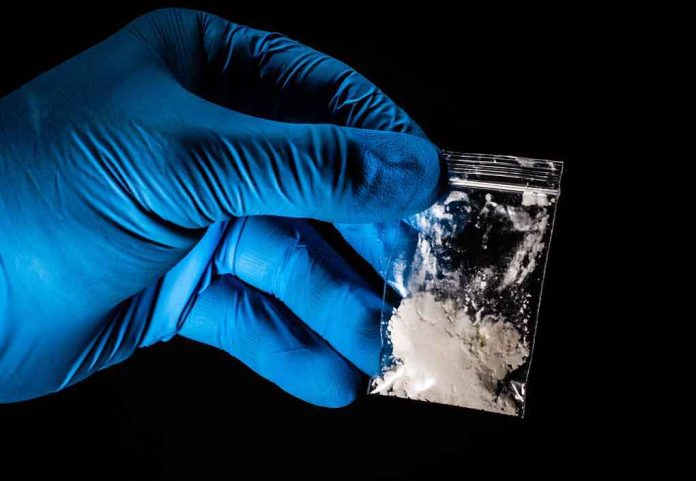
On Monday, September 14, San Francisco police announced four arrests and more than 20,000 counterfeit pills seized, closing a months-long investigation into the death of a 16-year-old — the city’s first fatality from cychlorphine, a synthetic opioid that experts say can be far more powerful than fentanyl and that the common fentanyl test strips cannot detect.
Story Highlights
- September 14: police arrested four suspects and seized more than 20,000 counterfeit pills after a months-long investigation.
- San Francisco confirmed its first death tied to cychlorphine, a potent synthetic opioid, in a 16-year-old.
- Experts say cychlorphine can be far more powerful than fentanyl and harder to reverse; fentanyl test strips do not detect it.
- Counterfeit-pill deaths have been rising nationwide, especially among youth.
Police Tie Teen Overdose to Counterfeit Pills and Make Four Arrests
San Francisco, California police reported four arrests linked to counterfeit pills after a 16-year-old died of an overdose earlier this year. Investigators said the case unfolded over months and led to the seizure of more than 20,000 fake pills in the city. City health officials previously confirmed the teen’s death involved cychlorphine, a lab-made opioid never before recorded in a San Francisco fatality. Authorities said the pills were counterfeit and tied to local street sales, not a pharmacy source.
Officials have not released all charging details. Police described the operation as focused on pill distribution that appeared to target young users. The arrests followed interviews, surveillance, and drug testing tied to the teen’s death, according to local reporting. The San Francisco Department of Public Health said the case marked the first detection of cychlorphine in a city overdose, which helped set the investigation in motion.
Earlier this year, a 16-year-old San Franciscan died from an overdose after taking counterfeit pills.
It’s hard to imagine what this family has gone through. My heart is with them, and I thank them for sharing their story.
This tragic case set off a sweeping investigation,…
— Daniel Lurie 丹尼爾·羅偉 (@DanielLurie) September 15, 2026
Health Officials Warn of a Potent, Hard-to-Detect Opioid
San Francisco health leaders warned that cychlorphine is a non-fentanyl synthetic opioid now showing up in some U.S. deaths and recently in the city’s first case. National reporting indicates experts believe it can be many times stronger than fentanyl and may need multiple doses of naloxone to reverse. Test strips that can catch fentanyl do not detect cychlorphine, which raises the risk for people who think they are taking a known pill and try to check it first.
Public health officials said the victim likely took counterfeit pills that hid powerful opioids inside. That pattern has grown across the country, where fake pills are pressed to look like common pain or anxiety drugs. These pills often carry uneven doses and can include new opioids that users do not expect. Health workers urge people to carry extra naloxone and to call emergency services fast when someone shows overdose signs.
Why Counterfeit Pills Are Fueling a Wider Crisis
Federal data show overdose deaths with evidence of counterfeit pill use more than doubled from mid-2019 to late 2021, with the sharpest increases in the West. Adolescents are affected. One national report found counterfeit pills present in about one quarter of overdose deaths among people aged 10 to 19. Doctors and first responders say counterfeit pills can mask deadly drugs. That leaves families, schools, and communities facing sudden tragedies without warning.
San Francisco’s case taps into that national story. A teen’s death, a new opioid, and a street market that churns out fake pills show gaps in how the system protects kids. Families want treatment access that works. Police want tools to stop dealers. Health leaders want broader testing and faster alerts when new drugs show up. Many Americans see a government that warns after the damage is done, not before it starts.
What This Means for Parents, Schools, and City Leaders
Parents can talk with teens about pill risks, even for pills that look “real.” Schools can expand peer education and keep naloxone on hand. City leaders can back rapid drug-checking and early alerts when novel opioids appear. Police can keep pressing pill networks while health teams expand treatment slots. The San Francisco arrests will move through the courts, but the broader challenge remains: stop fake pills before they reach kids and turn one bad choice into a funeral.
Sources:
nypost.com, sf.gov, nbcbayarea.com, x.com, cdc.gov