

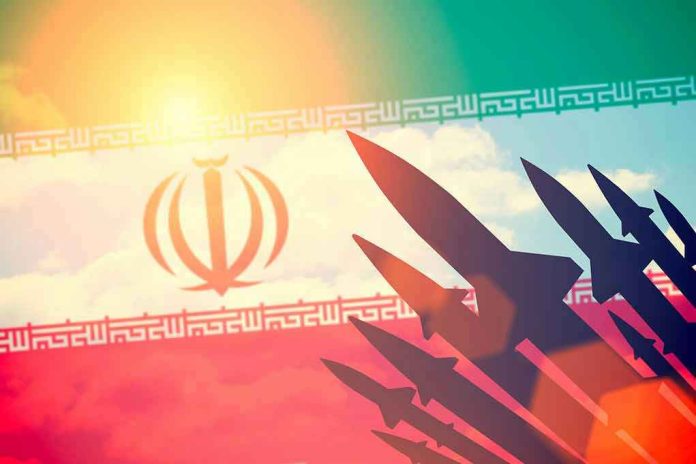
Military strikes against Iran’s nuclear facilities would repeat the catastrophic foreign policy blunders that have plagued American interventions across the Middle East for decades.
Story Snapshot
- Iran escalated uranium enrichment to 60% following the collapse of diplomatic agreements
- Historical military interventions in the Middle East have consistently produced unintended consequences
- Iran’s nuclear program spans over 65 years with multiple diplomatic opportunities squandered
- Current uranium enrichment levels bring Iran dangerously close to weapons-grade material
Iran’s Nuclear Program Reaches Critical Threshold
Iran’s uranium enrichment has escalated to dangerous levels following the Biden administration’s foreign policy failures. The Islamic Republic now enriches uranium to 60% purity, a significant jump from previous levels and perilously close to the 90% needed for nuclear weapons. This escalation directly resulted from the collapse of the Joint Comprehensive Plan of Action (JCPOA) in 2020, when Iran abandoned diplomatic restraints that had previously limited their nuclear ambitions.
The current crisis stems from decades of inconsistent American policy toward Iran’s nuclear program. Since the 1979 Islamic Revolution suspended nuclear cooperation, Iran has systematically expanded its capabilities. Secret uranium enrichment facilities were revealed in 2002, exposing the regime’s deceptive practices and highlighting the failure of international oversight mechanisms to detect clandestine nuclear activities.
Historical Pattern of Military Intervention Failures
American military interventions throughout the Middle East demonstrate a troubling pattern of unintended consequences that bombing Iran would likely replicate. Each military action has destabilized regions, created power vacuums, and strengthened adversaries rather than achieving stated objectives. The Iraq War, Libya intervention, and Syria involvement all began with promises of swift resolution but evolved into prolonged conflicts with devastating humanitarian and strategic costs.
Intelligence assessments indicate Iran halted its nuclear weapons program in late 2003, suggesting diplomatic pressure and sanctions proved more effective than military threats. This timeline reveals that Iran responds to sustained pressure rather than immediate military action, supporting arguments for comprehensive sanctions over bombing campaigns that could galvanize domestic support for the regime.
Strategic Risks of Military Action
Bombing Iranian nuclear facilities would likely accelerate rather than delay weapons development while providing the regime with justification to abandon all international agreements. Military strikes could scatter nuclear materials, complicate future monitoring efforts, and drive the program deeper underground where detection becomes nearly impossible. The Iranian government would exploit any attack to rally domestic support and justify complete withdrawal from international oversight.
My quick thoughts re the US and Iran.
Bombing Iran risks repeating past mistakes.
A pragmatic, hands-off approach should guide US policy in the days ahead.https://t.co/jU2duiCkE9
— Jon Hoffman (@Hoffman8Jon) January 12, 2026
Conservative principles favor measured responses that protect American interests without creating new security threats. Military action against Iran risks expanding regional conflict, threatening key allies like Israel and Saudi Arabia, and potentially triggering asymmetric attacks against American forces and interests worldwide. A pragmatic approach prioritizing sanctions, diplomatic isolation, and defensive support for allies offers better prospects for containing Iranian nuclear ambitions without repeating past strategic blunders.
Sources:
The timeline of Iran’s nuclear program: from 1956 to now
US and Israeli strikes on Iran: A timeline of Iran’s nuclear programme
Timeline of the nuclear program of Iran
Iran’s Nuclear Program: Status