

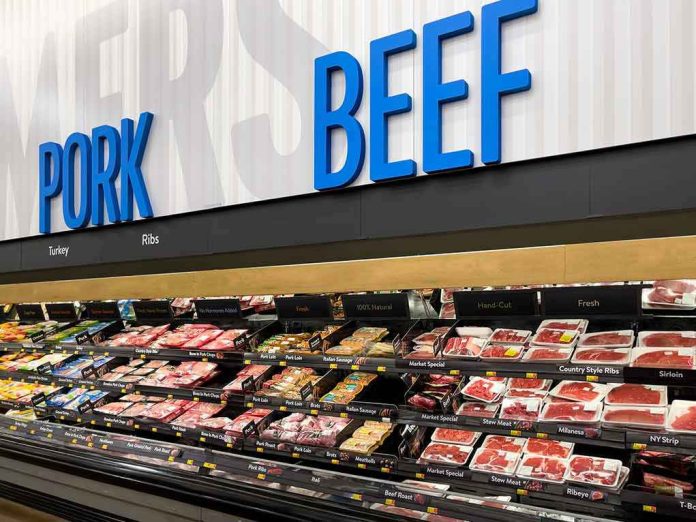
The Biden administration’s lax enforcement of antitrust laws has left American cattle ranchers in peril, but Trump’s rumored intervention could change the game.
Story Snapshot
- Trump’s potential move against meatpacker monopolies could shake up the industry.
- Ranchers face economic hardships due to market manipulation.
- 85% of beef processing is controlled by four companies.
- Calls for enforcement of the Packers and Stockyards Act intensify.
Trump’s Alleged Move Against Meatpacker Monopolies
As speculation grows around former President Trump’s next steps in tackling corporate monopolies, attention turns to the meatpacking industry. Historically dominated by the “Big Four” companies—Tyson, Cargill, JBS, and National Beef—these corporations control 85% of beef processing and 87% of fed cattle slaughter, leading to calls for urgent reform. Should Trump decide to intervene, it could signal a major shift in market dynamics, aligning with his populist “America First” stance.
Ranchers have long suffered under the weight of these monopolies, with over 40 cattle farms closing daily due to manipulated market conditions. The use of Alternative Marketing Arrangements has kept rancher prices low and consumer beef costs high, fueling economic distress in rural communities. A Trump-led push could potentially dismantle these practices, offering a lifeline to struggling farmers.
The Historical Context of Antitrust Concerns
The roots of the current crisis lie in the deregulation era of the 1980s, which allowed meatpacking giants to consolidate power unchecked. This has led to significant market distortions, with the U.S. cattle industry facing unprecedented challenges. Witnesses at congressional hearings have highlighted the severe impact on ranchers, including increased suicide rates and financial ruin, as they demand enforcement of the Packers and Stockyards Act of 1921.
Despite Biden’s 2021 Executive Order aimed at boosting competition, critics argue that the previous administration’s efforts were more rhetorical than actionable. The continued inaction has left ranchers vulnerable, with many hoping for decisive measures under Trump’s leadership to restore market fairness and protect their livelihoods.
Potential Impacts of Trump’s Intervention
Should Trump take action against these monopolistic practices, the implications could be far-reaching. In the short term, ranchers might see improved prices, while meatpackers could face profit disruptions. For consumers, this could mean higher beef costs, yet the long-term benefits of market deconcentration could outweigh initial price hikes. The preservation of family farms and a reduction in rancher suicides would mark a significant social victory, reinforcing the traditional values many American conservatives cherish.
While the details of Trump’s rumored intervention remain speculative, the potential for change is a beacon of hope for many in the agricultural sector. It underscores the ongoing battle between free-market proponents and those advocating for stricter regulations to curb corporate excesses. As the political landscape continues to evolve, these developments could have lasting impacts on both the industry and the broader economy.
Sources:
House Hearing on Meatpacker Monopolies
Clayton Morris YouTube Channel