

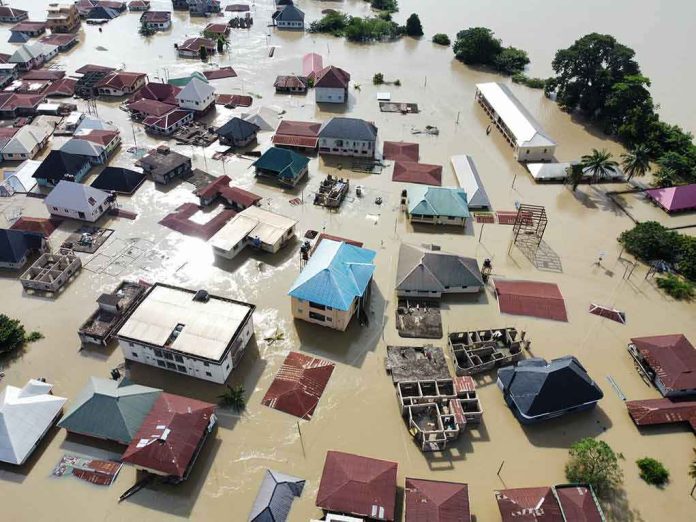
A five-story building under construction in southern China fell into a river within seconds after flood-soaked ground suddenly gave way, underscoring how extreme rain can turn solid earth into a trap for people and property.
Story Snapshot
- Verified video shows the building collapsing into floodwaters after the ground failed.
- Heavy rains and landslides across China have caused multiple collapses and evacuations.
- Soil saturation from persistent rain can undermine foundations and trigger slope failures.
- Disaster patterns point to infrastructure risks when storms linger and drainage is weak.
What The Video Shows And Why It Matters
Reuters verified footage captured a five-story structure under construction sliding into a river in southern China, with the supporting ground giving way in moments. Local reporting tied the event to widespread flooding and soaked soil that weakened foundations and slopes. The collapse happened fast, which is common when water fills the tiny spaces in soil, removes friction, and lowers strength. People nearby had little time to react, which raises safety concerns for builders and residents near swollen rivers.
Emergency officials across China have dealt with repeated floods this season, as storms dumped heavy rain over several regions for days. Evacuations, road washouts, and slope failures have followed in many provinces. Reporters noted buildings sliding down hillsides in the south after their bases softened in the rain. These events often cluster when a stalled storm keeps feeding moisture into the same watersheds. Bridges, power lines, and homes then face compounding stress with each passing day of runoff.
How Saturated Soil Topples Buildings
Engineers explain that long rain pushes water into soil, raises pore pressure, and reduces how much weight the ground can hold. That process can cause riverbanks to slump and slopes to move even if the building above is soundly framed. The video case fits that pattern: the soil failed first, the structure followed. When foundations lose support on one side, buildings can tilt, crack, and then fall. In flood zones, safe design needs strong drainage, deeper piles, and set-backs from eroding banks.
Past collapses in China’s flood seasons show similar triggers. Reports this year describe landslides that buried residents and caused multiple buildings to fail in the southwest, while rescuers pulled survivors from debris. Other storms forced tens of thousands to evacuate as creeks jumped their banks and roads fell away. Each case is local, but the chain is familiar: intense rain, saturated ground, slope movement, and sudden failure. These patterns highlight the need for better mapping of weak soils and active slopes near towns.
Risks For Communities And Builders
Local officials face a hard mix of rapid urban growth and stronger rain bursts. When new projects rise along rivers or at the base of hills, poor drainage or rushed site work can stack risk. The southern collapse shows how one failure can happen without warning once the ground passes a tipping point. Builders and inspectors can cut danger by checking soil reports, reinforcing riverbanks, and pausing work during peak saturation. Clear rules and steady checks save lives when storms line up.
Heavy rain linked to Typhoon Saudel has caused flooding in China’s southern provinces of Fujian and Guangdong. The floods submerged vehicles and caused a three-storey brick building to collapse.#China #Flood pic.twitter.com/veqQSMsT5n
— MediaOne World (@MediaOneWorld) September 4, 2026
For families living near these sites, early alerts matter. Simple steps help: watch for fresh ground cracks, stuck doors, or tilting walls after long rain. Town leaders can post flood gauges online, test sirens, and mark flood-safe routes. National planners can back these moves with funds for hillside drains, buyouts in the highest-risk bends, and stronger codes tied to soil type. The cost is real, but the bill for rescues, rebuilds, and lost lives is far higher after the ground lets go.
Sources:
youtube.com, wncy.com, usnews.com, reuters.com, theguardian.com