

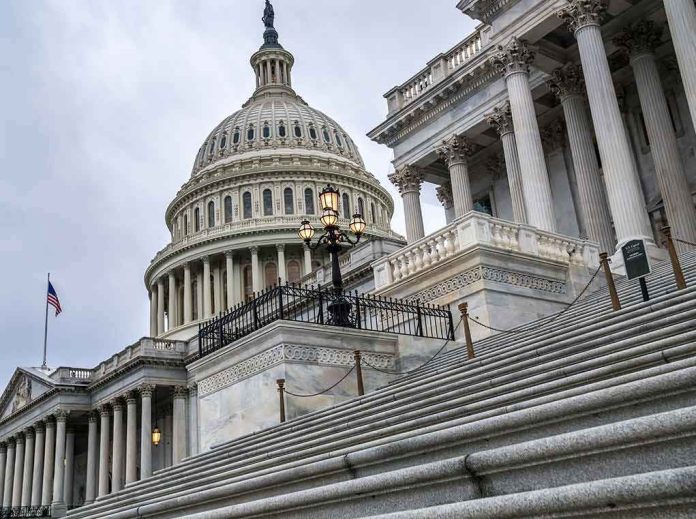
Senate Republicans just used a must-pass funding bill to freeze a White House plan that would let political appointees pick which science grants get paid and which don’t.
Quick Take
- A Senate stopgap funding bill unveiled Sunday would pause a proposed rule letting political appointees control federal grant decisions.
- The rule would let officials reject grants that “didn’t fit the president’s agenda,” bypassing expert peer review.
- The pause only lasts until December 11, when the stopgap funding bill expires.
- Some Republicans, including Senator Susan Collins, publicly criticized the rule for cutting appeal rights and adding new approval hurdles.
- Critics on the right call the move a “cave” that shields spending from scrutiny, while mainstream reports describe it as a temporary block, not a permanent rollback.
What The Funding Bill Actually Does
Senate Republicans released a government funding bill Sunday that would keep federal agencies running through December 11. Tucked inside is a provision that temporarily blocks a White House proposal giving political appointees new power over how federal grants get approved. The Washington Post confirmed Senate Republican leaders joined in rebuking the White House over the plan, calling it a rare bipartisan pushback against an administration priority.
The Rule Republicans Are Pausing
The Office of Management and Budget proposed a rule in May that would require senior political appointees to review every discretionary federal award. Appointees could deny funding if a project “didn’t fit the president’s agenda”. The proposal’s own text says it would “require and empower political appointees to decide which grants do and do not get funded,” and explicitly tells them not to defer to expert peer review panels.
Republicans Who Objected
Not every Republican stayed quiet. Senator Susan Collins of Maine publicly criticized the proposal, saying it would let agencies cancel discretionary grants and strip recipients of their right to appeal. Her objection matters because it shows the pushback wasn’t purely partisan. It came from within the GOP, built on concerns about losing established checks on how the executive branch hands out taxpayer money.
Why The Block Is Only Temporary
The pause is tied directly to the funding bill’s expiration date. Stat News reported the continuing resolution would block the rule “only until Dec. 11,” the same day the stopgap funding runs out. That means the underlying fight isn’t settled. It’s delayed. Once lawmakers negotiate the next funding measure, the White House could try again to finalize the same grant-control authority Congress just paused.
How Critics Are Framing It
Conservative outlets, including The Gateway Pundit, argue the provision “shields” more than $700 billion in grant spending from accountability by suspending planned reforms meant to track subawards after money leaves Washington. That framing treats the pause as a loss for transparency. But the reporting on the underlying rule tells a different story: the White House proposal itself was the change being paused, not an existing disclosure requirement being repealed.
A Bipartisan Fight Over Who Controls The Money
Politico reported that top senators from both parties were weighing whether to block the administration’s “grant shakeup” as they negotiated the funding bill. Inside Higher Ed noted the plan announced Sunday would prevent the rule from taking effect “until mid-December—at least,” describing it as a temporary delay rather than a permanent fix. Democratic senators, including John Hickenlooper, had separately pressed the Office of Management and Budget to withdraw the rule entirely, calling it harmful to independent research.
What Stays Unresolved
Neither side has produced the final bill text lawmakers will vote on, so the exact legal language pausing the rule remains unconfirmed in public view. What is confirmed: the fight centers on whether political appointees, rather than career staff and peer reviewers, should decide which federal grants survive. That question returns to Congress in December, when the current funding pause expires and the debate starts again.
For millions of Americans already skeptical that Washington spends their tax dollars wisely, this episode adds fresh fuel. Whether framed as a win for transparency or a temporary dodge, the underlying grant rule and its December deadline mean this fight over who controls hundreds of billions in federal funding is far from over.
Sources:
thegatewaypundit.com, thehill.com, hsgac.senate.gov, hickenlooper.senate.gov, washingtonpost.com, insidehighered.com, stm-assoc.org, federalnewsnetwork.com, linkedin.com