

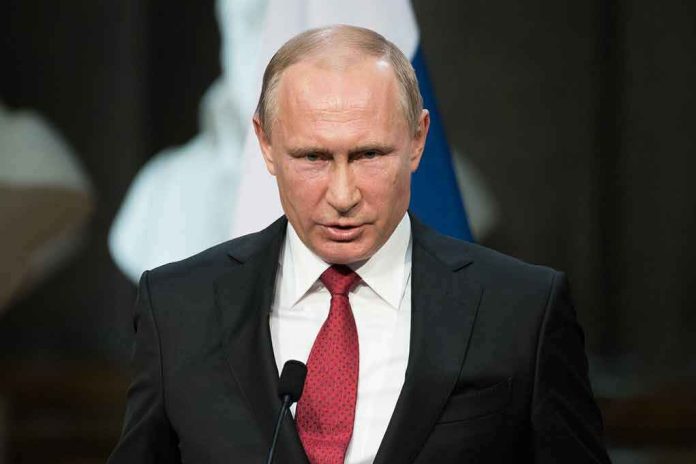
Russia’s latest mediation attempt in the Middle East raises questions about the balance of power and the future of regional stability.
Story Overview
- Putin offers to mediate between Israel and Iran amid rising tensions.
- Iran’s crackdown on protests has the U.S. contemplating military action.
- Russia seeks to prevent escalation in a strategically critical region.
- Implications for U.S. foreign policy and regional alliances are significant.
Putin’s Mediation Role in Middle East Tensions
On January 16, 2026, Russian President Vladimir Putin initiated phone conversations with Israeli Prime Minister Benjamin Netanyahu and Iranian President Masoud Pezeshkian. During these discussions, Putin offered Russia’s services as a mediator in the ongoing Middle Eastern tensions, particularly concerning Iran’s internal unrest and U.S. military threats. This move underscores Russia’s intent to position itself as a pivotal player in Middle Eastern diplomacy, leveraging its ties with both Israel and Iran to mitigate potential escalation.
This initiative follows a long-standing tradition of Russia’s involvement in regional conflicts, aiming to stabilize a volatile area while enhancing its influence. Russia’s strategic partnership with Iran includes arms trade and joint projects, while maintaining a pragmatic dialogue with Israel. The Kremlin’s outreach is a calculated step to prevent further deterioration of the situation, especially given the recent breaches of the Gaza ceasefire agreement by Hamas and PIJ.
Regional Implications and U.S. Concerns
Iran’s current political unrest, following the crackdown on pro-Palestinian protests, has created a precarious situation. The U.S., under President Trump’s administration, has been contemplating a military response to Iran’s actions. Israel, meanwhile, is seeking to delay any military intervention, as evidenced by Mossad Chief David Barnea’s recent visit to the U.S. Putin’s diplomatic efforts are seen as a counterbalance to these potential military escalations.
For conservatives, this situation raises concerns about U.S. foreign policy and its reliance on military solutions. The potential for a new conflict in the Middle East could have significant repercussions for global stability and the U.S.’s strategic interests. Russia’s involvement as a mediator might shift the balance of power, potentially diminishing U.S. influence in the region.
Long-term Consequences for Global Diplomacy
In the long run, Russia’s successful mediation between Israel and Iran could solidify its role as a key diplomatic player in the Middle East. This could lead to strengthened Russia-Iran ties, impacting the regional power dynamics and influencing the execution of President Trump’s 20-point Gaza plan. For many conservatives, the focus remains on ensuring that U.S. interests and values are not compromised in the process.
While Russia’s intentions may align with seeking regional stability, the U.S.’s role as a global leader must not be overshadowed. The upcoming consultations and their outcomes will be crucial in determining the future trajectory of Middle Eastern politics and U.S. foreign relations.