

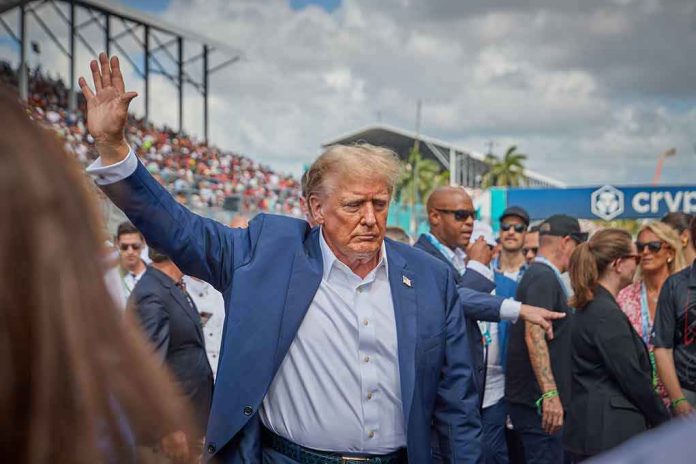
A stunning lawsuit now claims Trump’s own security detail allowed anti-Trump activists to get dangerously close, exposing a vulnerability every patriot assumed was locked down.
Story Snapshot
- A new federal lawsuit alleges an “unbelievable security lapse” around Donald Trump at one or more public events.
- Plaintiffs say Secret Service and partner agencies ignored basic protective protocols that should shield a high-profile conservative leader.
- The case fits a growing wave of litigation that paints Trump-era federal operations as reckless or norm-breaking.
- How this lawsuit plays out could reshape crowd control, protest zones, and security at future Trump rallies.
Lawsuit Claims a Serious Breach in Trump’s Protective Perimeter
According to the complaint and surrounding coverage, the lawsuit targets the U.S. Secret Service and possibly local law-enforcement partners for what plaintiffs call a gross failure to safeguard Donald Trump at one or more events. They argue that anti-Trump or pro-Palestinian activists were able to move much closer to Trump, his routes, or secure entrances than standard protocols would ever allow for a former president under full-time protection.
Plaintiffs frame the incident not as a routine protest disruption but as a systemic collapse in advance screening, perimeter design, and on-the-ground coordination. Their filings reportedly describe predictable risk factors that went unaddressed, from known protest mobilization to physical weak points at the venue. By casting this as an “unbelievable security lapse,” they seek to convince the court that protections failed at the most basic, common-sense level, putting Trump, staff, and supporters in unnecessary danger.
How Activists Allegedly Got So Close to a Protected Former President
Based on the reconstructed timeline, Trump events were announced, venues chosen, and standard advance work initiated, including site surveys, entry mapping, and protest-zone planning. On event day, organized activist groups approached the area and, through gaps in perimeter control, reportedly gained access far closer than normal to secure spaces or movement corridors. Video, eyewitness reports, and internal complaints later surfaced, suggesting that screening, fencing, or credentialing failed to keep hostile actors at an appropriate distance.
These accounts describe a layered breakdown: shared responsibility among Secret Service, DHS components, and local police; unclear or poorly enforced “free-speech zones”; and possible blind spots at side doors, service entrances, or loosely guarded fencing. In that environment, determined activists needed only to exploit one weak point to close the gap. For a security culture built on a “zero-failure” mindset since the Kennedy assassination era, any unvetted individual reaching that range of a high-value protectee is treated as a serious operational error, even if no physical attack occurs.
Why This Case Matters for Conservatives and Constitutional Security
For many conservatives, the idea that activists hostile to Trump could penetrate protective layers raises hard questions about federal priorities and competence. The same federal apparatus that often seems heavy-handed with surveillance, data collection, and regulation is now accused of dropping the ball on its most basic duty: physically protecting a former president and the voters who gather to hear him. Plaintiffs portray this as evidence that bureaucratic culture and politicized decision-making have eroded professional, apolitical security standards.
The lawsuit also lands amid other high-profile Trump-era legal battles over federal conduct, including class actions alleging an unlawful “Big Brother” style interagency database of Americans’ personal information and challenges to mass transfers of Medicaid health data to immigration authorities. In each case, critics say agencies cut corners on long-standing safeguards. While those fights focus on privacy and data, not physical safety, they feed a narrative that parts of the bureaucracy are comfortable bending rules yet still failing to protect core constitutional interests like public safety and free political participation.
Key Players and the Tug-of-War Over Security Accountability
At the center stands Donald Trump, a former president who draws large, passionate crowds and fierce opposition. He depends on maximum security while also valuing energetic, close-packed rallies that project strength. The Secret Service leads his protective detail, with DHS oversight and heavy reliance on city police, sheriffs, and state troopers to manage outer perimeters and protest groups. Plaintiffs include individuals who say they were put at risk and watchdog or civil-liberties organizations experienced in challenging Trump-era federal practices.
Those groups have previously partnered with outfits like Democracy Forward, the League of Women Voters, and other litigants who accuse the administration of overreach in databases, deportation-related data sharing, and attempts to weaken consumer protections. State attorneys general in blue states have likewise sued over immigration data, health privacy, and financial regulation. While not necessarily parties here, they form a legal backdrop in which federal agencies defending Trump-related policies are already on the defensive. In this environment, the security-lapse case could gain traction as another example where courts must push federal actors back toward established norms.
Early Legal Maneuvers and What Comes Next for Rally Security
Procedurally, the case appears to be in its earliest phase: the complaint has been filed and publicized, but there are no public rulings on motions or discovery. Federal defendants typically respond by citing sovereign immunity, discretionary-function protections, and the overall success rate of Secret Service operations. They may announce an internal review while saying little about specifics. Plaintiffs, meanwhile, will lean heavily on any available video, internal whistleblower accounts, and expert testimony describing how proper planning should have prevented the close approach in the first place.
Whatever the legal outcome, the practical effects will likely be felt quickly at Trump rallies and similar events. Agencies can tighten magnetometer coverage, create deeper buffer zones between protesters and entrances, and harden side access points without waiting for a judge’s order. For Trump supporters who already distrust federal agencies after years of double standards, the incident will reinforce calls for strict accountability, serious after-action reviews, and a renewed insistence that government focus on its constitutional core: protecting life, liberty, and the right of Americans to assemble and speak without being put at needless risk.
Sources:
Trump Administration Sued Over Massive Interagency Database of Americans’ Private Information
Attorney General Bonta Sues Trump Administration for Illegally Sharing Californians’ Medicaid Data
Summary of AFGE Lawsuits Against Trump: How Litigation Works
Class-Action Lawsuit Challenges Trump–Vance Administration’s Unlawful Interagency Database